Jesus had calmed storms and raised the dead, yet on the night of his arrest, in the olive grove called Gethsemane, Mark tells us he "began to be greatly troubled and distressed" (WEB Mark 14:33). That sentence alone is worth sitting with. Gethsemane sits between Peter's confident vow (WEB Mark 14:29-31) and the disciples' flight (WEB Mark 14:50), and it gives us one of the most honest pictures of Jesus' humanity in the Gospels.
Gethsemane is the place where Jesus faced the full weight of the cross in prayer and chose his Father's will over his own relief. If this scene feels heavy to read, that's a fair response; faithful readers across two thousand years have felt the same weight.
This article walks through Mark 14:32-42 alongside Matthew 26:36-46 and Luke 22:39-46. We'll look at "Abba, Father," the meaning of the cup, the sleeping disciples, and the warning that a willing spirit still lives in weak flesh. This post is part of our Famous Gospel Passages series, which walks through the Gospels passage by passage.
Quick Answer: Gethsemane is the olive grove where Jesus prayed on the night of his arrest (WEB Mark 14:32-42). There he felt deep sorrow, called on God as "Abba, Father," asked that the cup of suffering be removed, and then submitted fully to his Father's will while his closest disciples slept three times.
Definition: The Gethsemane account in the Gospels refers to the olive grove on the Mount of Olives where Jesus, facing his coming death, prayed in anguish and submitted to his Father's will.
Key Scripture: "He said, 'Abba, Father, all things are possible to you. Please remove this cup from me. However, not what I desire, but what you desire.'" (WEB Mark 14:36)
Key Evidence: As J. C. Ryle writes, "A man may mean well and yet fall into tremendous mistakes" (Expository Thoughts on Mark, on Mark 8:27-33).
Context: Mark sets Jesus' obedient prayer beside the disciples' failure, preparing readers for the arrest and the cross that follow.
This passage functions as the hinge between the Last Supper and the arrest, showing readers exactly what obedience cost Jesus. It exposes the gap between good intentions and real faithfulness, seen plainly in the sleeping disciples. It also offers comfort, since the Savior who prayed through anguish understands ours. The sections that follow cover the scene itself, the meaning of "Abba" and the cup, the warning about willing spirits and weak flesh, and what the passage means for believers today.
Key Takeaways
- Real anguish: Mark uses strong words for Jesus' distress, showing his full humanity (WEB Mark 14:33-34).
- Abba, Father: Jesus prays with family closeness and complete submission in a single prayer.
- The cup: The cup is the God-appointed suffering and judgment Jesus would bear for sinners.
- Willing spirit, weak flesh: Good intentions need watchfulness and prayer (WEB Mark 14:38).
- Faithful Savior: Jesus went on to the cross for disciples who slept.
What Happened in Gethsemane? Mark 14:32-42 Explained
Gethsemane was the olive grove Jesus and his disciples reached after crossing the Kidron Valley from the upper room (WEB Mark 14:26). John tells us it was a garden Jesus often visited with his disciples, which explains how Judas knew exactly where to find him (WEB John 18:1-2). Once there, Jesus takes Peter, James, and John further in, the same three who had seen Jairus' daughter raised and had stood with him at the Transfiguration.
The text tells us Jesus said, "My soul is exceedingly sorrowful, even to death. Stay here, and watch" (WEB Mark 14:34), language that echoes the psalmist's cast-down soul (compare Psalm 42:5). Then Jesus "fell on the ground" (WEB Mark 14:35), a posture of extreme distress and total submission that his first hearers would have recognized immediately. Gethsemane in Mark 14:32-42 shows the Son of God confessing a sorrow that threatens to overwhelm him and bringing that sorrow to his Father in prayer. For context on what led to this moment, see our explanation of the Last Supper in Mark 14:12-25.
How Matthew, Luke, and John Tell the Story
The four Gospels complement one another, and each adds a detail Mark leaves out.

- Matthew 26:36-46: Gives the wording "if it is possible, let this cup pass away from me" (WEB Matthew 26:39).
- Luke 22:39-46: Adds the strengthening angel and sweat like drops of blood, though readers should know verses 43-44 carry a textual question among manuscripts.
- John 18:11: Records Jesus' settled resolve, "The cup which the Father has given me, shall I not surely drink it?" (WEB John 18:11).
"Abba, Father" and the Cup Jesus Asked to Remove
"Abba" is an Aramaic family word for "Father," expressing closeness and respect at once. In Mark 14:36, honest petition and full submission stand side by side in a single prayer, neither one canceling the other.
The cup itself was no surprise to Jesus. He had already asked James and John, "Are you able to drink the cup that I drink?" (WEB Mark 10:38), so Gethsemane is where that earlier question becomes personal. Hebrews 5:7 tells us these prayers came "with strong crying and tears" (WEB Hebrews 5:7). In Gethsemane, Jesus asked plainly for relief and submitted completely, praying "not what I desire, but what you desire" (WEB Mark 14:36).
Ryle's commentary on Mark 8:27-33 stresses that Christ's suffering was necessary for our atonement, which helps us see the cup as essential to salvation, not optional pain. For the passage where Jesus first spoke plainly of his coming death, see our commentary on Peter's confession in Mark 8:27-33.
What the Cup Means in Scripture
Jesus' first hearers already knew the cup from the Prophets, where it carried a specific weight.
- God's assigned portion: The cup often pictures the portion God assigns, including his wrath against sin (WEB Isaiah 51:17).
- Greek term: ποτήριον (potērion) is the same word used in both Mark 10:38 and 14:36.
- Weight of sin: The cup points to the burden of bearing sin, something far deeper than physical pain alone.
The Spirit Is Willing but the Flesh Is Weak
Jesus turns from his own struggle to warn the disciples: "Watch and pray, that you may not enter into temptation. The spirit indeed is willing, but the flesh is weak." (WEB Mark 14:38). The Greek word γρηγορεῖτε (grēgoreite) means to stay alert, πειρασμός (peirasmos) means trial or testing, and σάρξ (sarx) points to human weakness in general.
Peter had vowed loyalty just hours earlier (WEB Mark 14:29-31), and Gethsemane becomes the first test of that vow. It gives way within an hour. Jesus' words carry both rebuke and recognition of real human frailty; the sleeping disciples show that a willing spirit holds firm only through watchfulness and prayer. You can read more about where that pattern leads in our study of Peter's denial in Mark 14:66-72.
Three Times Asleep: The Pattern Mark Builds
Mark structures the scene with a repeated cycle that builds tension toward the arrest.
- The cycle: Jesus withdraws and prays, returns, and finds the three asleep, three times in a row.
- The climax: "The hour has come. Behold, the Son of Man is betrayed into the hands of sinners" (WEB Mark 14:41).
- The result: Jesus rises settled to meet the betrayer, while his isolation already foreshadows Mark 14:50.
Why Gethsemane Matters for Christians Today
Gethsemane matters because it shows that Jesus knows distress from the inside. He is "one who has been in all points tempted like we are, yet without sin" (WEB Hebrews 4:15), which means believers never bring their fear to a Savior who stands apart from it. Maybe you've wondered whether praying honestly about your dread shows weak faith. Here, honest prayer and submission belong together, and you can bring real fear to God as a child comes to a father, without pretending it away.
Notice that Jesus' prayer was answered with strength to obey, not with removal of the cup. That pattern matters for how we pray. Watchfulness is for ordinary believers too, not only for those facing dramatic trials, since strong intentions still need daily dependence on God. Weary believers receive the same gentle recognition Jesus gave his disciples, that the flesh is weak, and the disciples slept while Jesus still went to the cross for them. Gethsemane teaches Christians that the Savior who prayed in anguish now sympathizes with every believer who prays through sorrow. For what came next, see our passage on the arrest of Jesus in Mark 14:43-52.
What J. C. Ryle Says About Peter's Weakness and Ours
Ryle wrote these words about Peter rebuking Jesus earlier in Mark's Gospel, but they apply directly to the same Peter who vowed loyalty and then slept in Gethsemane.
We have here a humbling proof that the best of saints is a poor fallible creature. Here was ignorance in Simon Peter. He did not understand the necessity of our Lord's death, and would have actually prevented His sacrifice on the cross. Here was self-conceit in Simon Peter. He thought he knew what was right and fitting for his Master better than his Master Himself, and actually undertook to show the Messiah a more excellent way. And last, but not least, Simon Peter did it all with the best intentions! He meant well. His motives were pure. But zeal and earnestness are no excuse for error. A man may mean well and yet fall into tremendous mistakes.
J. C. Ryle, Expository Thoughts on Mark, on Mark 8:27-33 (modernized edition).
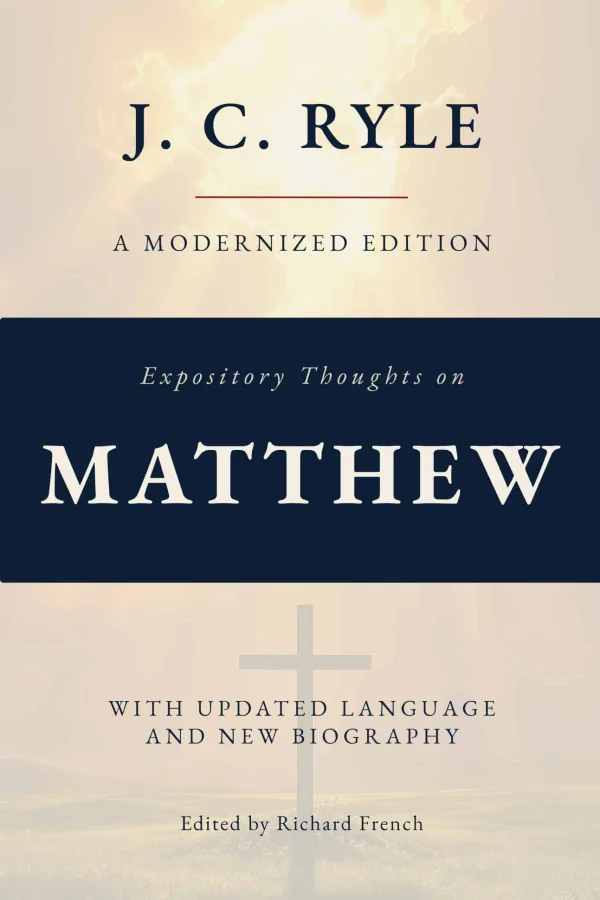
Read beside Gethsemane, this passage reminds us that sincere zeal offers no protection against failure, so believers need humility rather than confidence in their own resolve. It also fits Jesus' own command to watch and pray. For those wanting to trace this theme across the Gospels, J. C. Ryle's Expository Thoughts on the Gospels examines each occurrence in its immediate context.
Why This Passage Matters
Gethsemane shows a Savior who felt real sorrow and still chose his Father's will for our sake. Believers facing dread, grief, or loneliness can pray with the same honesty and submit with the same trust Jesus showed. The scene points to grace: Jesus stayed faithful when his friends failed, and he calls every disciple to watch and pray.
Conclusion
Gethsemane in Mark 14:32-42 reveals Jesus' deep anguish, his intimate prayer of "Abba, Father," the cup he accepted, and disciples whose willing spirits gave way to weak flesh. If you are carrying a fear tonight, you can bring it to the Father with that same honesty, trusting a Savior whose faithfulness held firm when every human support failed him. And if you have fallen asleep at your own post, take heart: Jesus did not abandon the disciples, and he will not abandon you. For a deeper passage-by-passage exploration of the Gospels, see J. C. Ryle's Expository Thoughts on the Gospels (modernized edition) and the Gospel study workbooks. The next entry in our Famous Gospel Passages series continues the story from here, as Jesus is betrayed and arrested.