Jesus walks out of the temple, and his disciples point admiringly at its massive stones. He answers that not one stone will be left on another (WEB Matthew 24:1-2). That single, startling sentence opens the Olivet Discourse, Jesus' last extended teaching before the cross.
Matthew 24-25 follows Jesus' lament over Jerusalem, "Behold, your house is left to you desolate." (WEB Matthew 23:38), and comes directly before the plot against him (WEB Matthew 26:1). His words about coming glory sit beside his coming suffering. You can trace that pattern further in our look at the Sermon on the Mount, where Jesus also pairs hard truth with pastoral care.
Maybe you have opened Matthew 24 and felt buried under wars, signs, and cosmic imagery. The Olivet Discourse is Jesus' answer to a real question from real disciples, standing on a real hillside, worried about a temple they loved. This article walks through that question, the signs Jesus names, the coming of the Son of Man, the parables of chapter 25, and the main ways Christians read the passage today.
Quick Answer: Matthew 24 and 25 record the Olivet Discourse, Jesus' teaching on the Mount of Olives, given in answer to his disciples' question about the temple's destruction, his coming, and the end of the age. It foretells judgment on Jerusalem, promises the visible return of the Son of Man, and calls disciples to watchful, faithful, merciful living.
Definition: The Olivet Discourse in the Gospels refers to Jesus' final extended teaching before his passion, in which he answers his disciples' questions about the temple's fall and the end of the age.
Key Scripture: "Watch therefore, for you don't know the day nor the hour in which the Son of Man is coming." (WEB Matthew 25:13)
Context: Christians agree on the certainty of Christ's return and the unknowability of the day, and they differ on how much of Matthew 24 was fulfilled in AD 70.
This discourse functions as both warning and comfort. It prepares the disciples for the temple's coming fall and for a long wait before Jesus returns, while keeping them from panic along the way. Its shift from prophecy to parable shows that prediction is never the point by itself; readiness is. The sections below examine the disciples' question, the signs and the Son of Man's coming, the parables of chapter 25, and the major interpretive approaches scholars bring to this passage.
Key Takeaways
- The question: The disciples ask about the temple's fall, Jesus' coming, and the end of the age in one breath (WEB Matthew 24:3).
- Steadiness: Wars and false messiahs are "the beginning of birth pains," so Jesus tells his followers to stay untroubled (WEB Matthew 24:6-8).
- Two horizons: J. C. Ryle saw both Jerusalem's destruction and Christ's second coming in the prophecy (Ryle, on Mark 13:1-8).
- Unknown day: No one knows the day or hour except the Father (WEB Matthew 24:36).
- Active readiness: The parables of chapter 25 define watchfulness as faithfulness and mercy.
Key Evidence
- The temple prediction: Jesus foretells the temple's complete destruction as the disciples admire its stones (WEB Matthew 24:1-2).
- The disciples' question: Their three-part question about the temple, his coming, and the end of the age frames the whole discourse (WEB Matthew 24:3).
- The Jerusalem parallel: Luke's version connects the flight instruction to armies surrounding Jerusalem (Luke 21:20).
- The Old Testament background: The Son of Man's coming draws on Daniel 7:13-14, and the cosmic imagery echoes Isaiah 13:10 and 34:4.
- The unknown day: Jesus states that only the Father knows the day and hour, which sets the limit for every interpretation (WEB Matthew 24:36).
- The parables of readiness: The faithful servant, the ten virgins, the talents, and the sheep and goats define readiness as faithful, merciful action (Matthew 24:45-25:46).

What Does the Olivet Discourse Teach in Matthew 24?
The setting explains the disciples' shock. Herod's temple was an architectural marvel, the center of Jewish worship and national identity, so its predicted destruction would have seemed almost unthinkable to those standing before its stones.
Jesus' first response is pastoral, not alarming. "See that you aren't troubled, for all this must happen, but the end is not yet" (WEB Matthew 24:6). Wars and rumors of wars are "the beginning of birth pains" (WEB Matthew 24:8), not proof the end has arrived.
Next comes the abomination of desolation, which draws on Daniel 9:27, 11:31, and 12:11. The instruction to flee is concrete and local: "let those who are in Judea flee to the mountains" (WEB Matthew 24:16), which Luke's parallel connects to armies surrounding Jerusalem (Luke 21:20). Then comes the coming of the Son of Man: "they will see the Son of Man coming on the clouds of the sky with power and great glory" (WEB Matthew 24:30), language drawn from Daniel 7:13-14 and echoing the judgment imagery of Isaiah 13:10 and 34:4.
In Matthew 24, the Olivet Discourse warns against deception, foretells judgment on Jerusalem, and promises the public, glorious coming of the Son of Man.
The Disciples' Question in Matthew 24:3
Everything in chapter 24 answers one question. "Tell us, when will these things be? What is the sign of your coming, and of the end of the age?" (WEB Matthew 24:3)
- Bundled question: the disciples join the temple's fall with the end of the age, and reading the discourse well means watching how, and where, Jesus answers each part separately.
The Parables of Matthew 25: Watchfulness, Faithfulness, and Mercy
A transition verse turns the discourse from prophecy toward exhortation. "But no one knows of that day and hour, not even the angels of heaven, but my Father only" (WEB Matthew 24:36). That sentence rules out date-setting before the parables even begin.
The faithful servant (24:45-51) and the ten virgins (25:1-13) both teach preparedness. The Greek word grēgoreō means "keep awake, be alert," and wedding processions were everyday scenes for Jesus' first hearers. The parable of the talents follows (25:14-30), where a talent represented a large sum of money. Readiness here means productive faithfulness, and the reward is warm rather than cold: "Enter into the joy of your lord" (WEB Matthew 25:21).
For a closer look at how this kind of parable works, our study of the Parable of the Talents walks through the details scene by scene.
Watchfulness in Matthew 25 means doing the master's assigned work with perseverance, preparation, and mercy until he returns.
The Sheep and the Goats
The discourse ends with the enthroned Son of Man separating the nations as a shepherd separates sheep from goats (25:31-33).
- The verdict: "The King will answer them, ‘Most certainly I tell you, because you did it to one of the least of these my brothers, you did it to me.’" (WEB Matthew 25:40).
- The point: care for the needy is the visible fruit of readiness for the King.
How Do Christians Interpret the Olivet Discourse?
It's okay to find this passage challenging. Faithful readers have wrestled with it for centuries and have landed in several interpretive camps, each worth understanding on its own terms. The preterist view holds that most or all of 24:4-35 was fulfilled in the Roman siege of Jerusalem in AD 66-70, with the "coming" read as a picture of judgment rather than the final return.
The futurist view applies most of the chapter to a final tribulation and return still ahead of us.
The most debated texts are "this generation will not pass away, until all these things are accomplished" (WEB Matthew 24:34), where the Greek genea can mean generation, race, or contemporaries, and the cosmic language of 24:29. Interpreters differ on timing, yet they agree on the central message: Jesus will surely return, and no one knows the day. For a closer look at the prophetic questions, see Revelation Explained on the Olivet Discourse and the end times.
Where the Views Agree
Despite real differences, evangelical scholars share common ground on this passage.
- Shared convictions: Jesus predicted the temple's fall, warned of deception, and promised a visible return in glory.
- Shared purpose: the discourse is meant to steady disciples and call them to faithful readiness, not to fuel speculation.
What J. C. Ryle Says About Jesus' Great Prophecy
Ryle reads this prophecy as addressing two distinct events joined in one discourse.
The chapter we have now begun is full of prophecy -- prophecy of which part has been fulfilled, and part remains to be accomplished. Two great events form the subject of this prophecy. One is the destruction of Jerusalem, and the consequent end of the Jewish dispensation. The other is the second coming of our Lord Jesus Christ, and the winding up of the state of things under which we now live. The destruction of Jerusalem was an event which happened only forty years after our Lord was crucified. The second coming of Christ is an event which is yet to come, and we may yet live to see it with our own eyes.
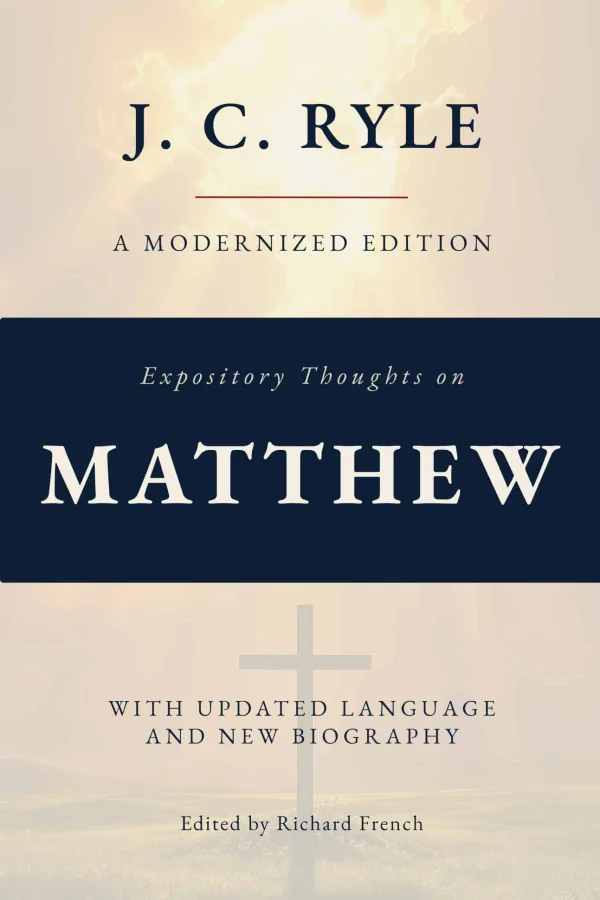
J. C. Ryle, Expository Thoughts on Mark, on Mark 13:1-8 (modernized edition).
Ryle held that the prophecy addresses both Jerusalem's destruction and the second coming. He also noticed that Jesus opens with warnings about error and war, and he treated these as a guide to what the church should expect while it waits. His commentary on the parallel passage in Matthew 24-25 handles the material with the same care, and you can find more study help at Gospels Explained.
Why This Passage Matters
This discourse gives believers comfort: history's turmoil sits within Christ's knowledge, and "my words will not pass away" (WEB Matthew 24:35). It guards against date-setting, sign-hunting, and fear-driven readings of current events. The returning King is the same Lord who identifies with the least of his brothers and welcomes faithful servants into his joy.
Conclusion
The Olivet Discourse answers the disciples' question with warnings, prophecy, and parables, and its center is the certain, glorious return of the Son of Man at an hour no one knows. You may still have open questions about timing, and there is no shame in that. What Jesus asks of you is clear: to be ready by living faithfully, watchfully, and mercifully today, in ordinary tasks and small kindnesses. If you want to continue studying how these themes unfold across Scripture's final book, revelation-explained.com is a natural next step. For a deeper, passage-by-passage look at Matthew's Gospel, see J. C. Ryle's Expository Thoughts on the Gospels (modernized edition) and the Gospel study workbooks. Whatever view you hold, take heart: the King who is coming is the one who knows you, and he will find you faithful by his grace.