Jesus' first words after the Beatitudes are a statement of fact rather than a command. He tells a crowd of ordinary Galilean fishermen and villagers, living under Roman rule, that they are "the salt of the earth" and "the light of the world" (WEB Matthew 5:13-14). Salt and light are among the most familiar images in the Sermon on the Mount, and it's easy to turn them into slogans about cultural influence or into one more task on a long list of spiritual effort.
Salt and light describes the identity of the people Jesus has just called blessed in the Beatitudes. If you've ever wondered whether this teaching asks too much of ordinary believers, you're in good company, because faithful readers have wrestled with it for centuries.
This article looks at salt in the first-century world, the city on a hill, the lamp and the basket, and why the passage ends with the Father's glory rather than the disciple's reputation. For a fuller look at where this passage fits, see the Sermon on the Mount Explained: A Verse-by-Verse Guide.
Quick Answer: Salt and light in Matthew 5:13-16 is Jesus' description of who His disciples already are. They are a distinct people who affect the world by contact, as salt does, and by visibility, as light does. Their good works flow from the character of the Beatitudes and lead others to glorify the Father in heaven.
Definition: The salt and light passage in the Gospels represents the visible, distinctive presence of Christ's disciples in the world, flowing from the character Jesus blesses in the Beatitudes.
Key Scripture: "Even so, let your light shine before men; that they may see your good works, and glorify your Father who is in heaven." (WEB Matthew 5:16)
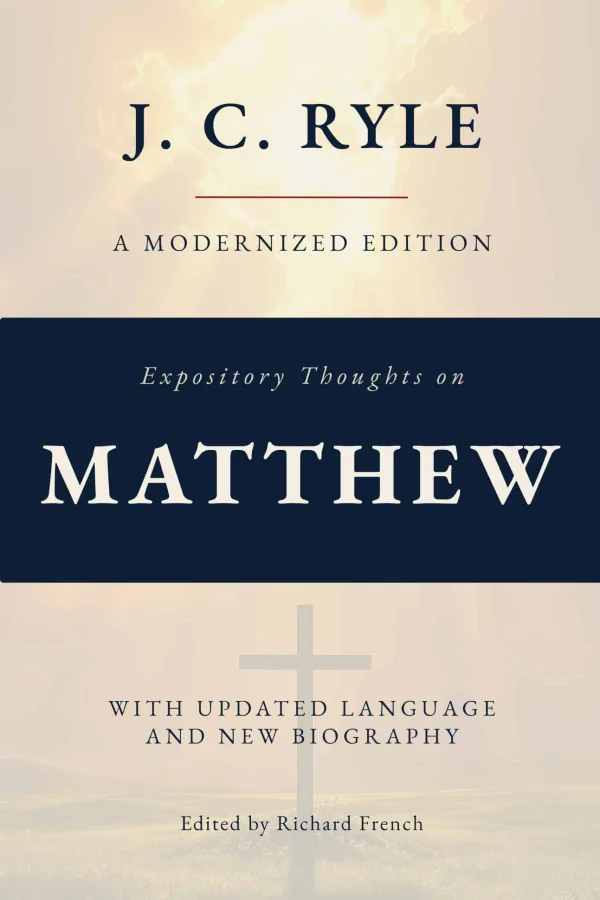
Key Evidence: As J. C. Ryle writes, "Let us learn how entirely contrary are the principles of Christ to the principles of the world." (Expository Thoughts on Matthew, on Matthew 5:1-12)
Context: The sayings form a hinge between the Beatitudes (5:3-12) and Jesus' teaching on the Law and a righteousness exceeding that of the scribes and Pharisees (5:17-20).
This passage assures Jesus' disciples that their ordinary presence already matters to God's purposes. It functions as a hinge in the Sermon, moving from who the disciples are to how that identity plays out in the world. The result is a teaching that frees believers from both anxious effort and quiet concealment. The sections below look at salt in the first-century world, the lamp and the hilltop city, and what it means to let your light shine without turning the passage into one more burden.
Key Takeaways
- Identity first: "You are" is an indicative statement. Influence flows from who disciples are in Christ, not from effort to become something new.
- Distinct salt: Salt that loses its flavor is useless. Disciples keep the character described in the Beatitudes.
- Visible light: A hilltop city and a lamp on a stand are meant to be seen, not hidden.
- The Father's glory: Good works point people toward God rather than toward the one doing them (WEB Matthew 5:16).
What Did Jesus Mean by Salt and Light in Matthew 5:13-16?
Salt and light are two images Jesus uses to describe the disciples who have just been called blessed in Matthew 5:3-12. The text tells us, "You are the salt of the earth, but if the salt has lost its flavor, with what will it be salted? It is then good for nothing, but to be cast out and trodden under the feet of men. You are the light of the world. A city located on a hill can’t be hidden." (WEB Matthew 5:13-14). Both sayings begin with the same two words. Jesus states a present reality about His followers rather than issuing an order to achieve one.
In context, this follows a careful shift. The Beatitudes describe "those who" mourn, hunger for righteousness, and are persecuted (5:3-10), then move to the direct "you" of verses 11-12. The people Jesus calls salt and light are the same humble, merciful, persecuted people just described. Their influence in the world is the influence of ordinary people, not the powerful.
Taken together, the two metaphors form a tight unit. Each image is paired with an everyday observation, and the whole passage ends in a single exhortation in verse 16. Salt works by contact, mixed into what it touches. Light works by exposure, seen by those around it. Salt and light in Matthew 5:13-16 describe the visible, distinctive presence of Christ's disciples in the world, grounded in the character Jesus blesses in the Beatitudes.
For the passage just before this one, see the series post on the Beatitudes in Matthew 5:3-12.
Why "You Are" Comes Before "Let Your Light Shine"
Jesus states the disciples' identity before giving any instruction, and the order shapes how the whole passage reads.

- Comfort: Ordinary believers are told their presence already matters, without first proving themselves.
- Derived light: Jesus says, "I am the light of the world" (WEB John 8:12). Disciples shine by reflecting Him, not by generating their own light.
- Instruction follows identity: Verse 16 calls disciples to live consistently with what they already are in Christ.
Salt in the First-Century World and the Warning of Lost Saltiness
Salt's usefulness depended entirely on remaining what it was.
The Old Testament gives salt a deeper resonance. Every grain offering was to carry "the salt of the covenant of your God" (WEB Leviticus 2:13), linking salt with covenant faithfulness and permanence. Elisha even used salt to heal a contaminated spring (WEB 2 Kings 2:19-22). The wise course is to hold them together rather than insist on just one.
Mark's Gospel links salt with peace among disciples (WEB Mark 9:50), and Luke links it with the cost of discipleship (WEB Luke 14:34-35). Many readers see Jesus using this image more than once, in different settings, to make related points. Salt is useful only while it remains salt, and Jesus warns that disciples who lose their distinctiveness lose their usefulness to the world.
What "Lost Its Saltiness" Means
- The clear point: Useless salt is "cast out and trodden under the feet of men" (WEB Matthew 5:13), a vivid picture of discipleship that has lost its character.
- A caution: It's wise to settle debated questions about perseverance from the fuller teaching of Scripture rather than from one metaphor alone.
The City on a Hill and the Lamp Under a Basket
Jesus' second image turns from taste to sight. "You are the light of the world. A city located on a hill can’t be hidden. Neither do you light a lamp and put it under a measuring basket, but on a stand; and it shines to all who are in the house." (WEB Matthew 5:14-15).
A typical village home had one main room, lit by a small clay lamp, or lychnos. Covering a lit lamp with a basket defeats the entire purpose of lighting it. Jesus' hearers didn't need the image explained.
The word "world" (kosmos) signals a scope wider than Israel alone, pointing outward toward all peoples and forward to the Great Commission (WEB Matthew 28:19-20). This picks up Isaiah's language about Israel's servant as "Indeed, he says, It is too light a thing that you should be my servant to raise up the tribes of Jacob, and to restore the preserved of Israel. I will also give you as a light to the nations, that you may be my salvation to the end of the earth." (WEB Isaiah 49:6) and the promise that "Nations will come to your light, and kings to the brightness of your rising." (WEB Isaiah 60:3). The hilltop city may even call Zion to mind (WEB Isaiah 2:2-3), though Jesus names no particular place. A lamp is lit to give light, so a permanently hidden discipleship contradicts its own purpose.
Let Your Light Shine: Living as Salt and Light Without Moralism
Living as salt and light means displaying the character Jesus has already given, so that others see good works and give glory to the Father. Verse 16 is the climax of the whole unit: kala erga means beautiful, admirable works, and doxazō means to give honor. People see the works. The Father receives the glory.
Isaiah 58 connects light with practical mercy: sharing bread with the hungry and clothing the naked, after which "your light will break out as the morning" (WEB Isaiah 58:8). This matches Jesus' focus on good works rather than abstract piety.
Perhaps you've noticed how this seems to sit awkwardly beside Matthew 6:1, where Jesus warns against giving "to be seen by them." The two passages aren't in tension once you notice the difference in aim. Good works in 5:16 point toward the Father, while the showy practice condemned in chapter 6 points toward the one doing them. For more on that balance, see the series post on Matthew 6:1-4.
The light itself comes from Christ, so the disciple's task is to reflect Him rather than manufacture something new. Courage replaces concealment, and faithfulness replaces blending in. A helpful question for small groups or personal reflection: what in our shared life would make our neighbors notice, and eventually think of God? The goal of salt and light is the Father's glory, which frees disciples from both self-promotion and fearful hiding.
For readers wanting to trace how this theme develops across the rest of the Sermon, J. C. Ryle's Expository Thoughts on the Gospels examines each passage in its immediate context.
Common Misreadings to Avoid
Each of the following misreadings drifts away from what the text actually says.
- Good works as the root of acceptance: the passage describes the fruit of discipleship, not its foundation; acceptance with God rests on grace.
- A political program: the text speaks of character and works, and says nothing about strategies for cultural or social control.
- Private faith only: the hidden lamp and the hidden city are exactly what Jesus rules out.
What J. C. Ryle Says About the People Who Are Salt and Light
Ryle looks back to the Beatitudes to ask what kind of people these salt-and-light disciples really are.
J. C. Ryle, Expository Thoughts on Matthew, on Matthew 5:1-12 (modernized edition, Indie Pen Press).
Ryle measures Christian living by the Sermon itself, and his order matters: sound doctrine first, holy living as its fruit. That matches the pattern of 5:13-16, where identity comes before action. He points readers back to the Beatitudes to learn what holy living looks like, since these are the very people Jesus then calls salt and light.
Why This Passage Matters
Matthew 5:13-16 assures believers that their ordinary lives matter to God's purposes in the world. Many believers feel pressure either to blend in with the surrounding culture or to hide their faith out of fear, and this passage speaks directly to both. Christ Himself is the true light (WEB John 8:12), and His people shine by grace, not self-effort. Their good works lead others, in time, to the Father.
Conclusion
Salt and light describe who Jesus' disciples already are: a distinct, visible people shaped by the Beatitudes, whose good works direct attention to the Father in heaven. Jesus spoke these words to humble, ordinary followers, not to the powerful or the polished. You can rest in the identity He gives you, keep your distinctive character, and let your light be seen without anxiety or self-display. On the days when your faith feels small, remember that Jesus has already called you salt and light, and He will keep shining through you.
For the full series, return to Sermon on the Mount Explained: A Verse-by-Verse Guide, and continue on to Jesus' teaching on the Law in Matthew 5:17-20. For a deeper passage-by-passage exploration of the Gospels' teaching and structure, see J. C. Ryle's Expository Thoughts on the Gospels (modernized edition) and the accompanying Gospel study workbooks.