Many of Jesus' first hearers were day laborers who needed each day's wage to feed their families, much like the vineyard workers in Matthew 20:1-16. When Jesus said "don't be anxious," he spoke to people who had real reasons to worry. Matthew 6:25-34 asks every reader to seek first the kingdom, and its answer meets ordinary worry with the character of God himself.
This passage closes Jesus' teaching on treasure and masters in the Sermon on the Mount, part of the larger Sermon on the Mount Explained: A Verse-by-Verse Guide. The command to seek first the kingdom is not a vague call to relax. It specifically names God's reign and righteousness as the settled priority that reorders how disciples think about food, clothing and tomorrow.
Let's look at how the lead-in of 6:19-24 sets up the teaching, what the pictures of birds and lilies are meant to show, and what the passage asks of us today. Maybe you've lain awake running the numbers on bills, or felt that worry about provision is somehow a failure of faith. This passage speaks to that fear gently, and it's okay to come to it with honest questions.
Quick Answer: Seek first the kingdom is Jesus' command in Matthew 6:33 to make God's reign and righteousness the settled, continual priority of life. Spoken to disciples tempted by anxious worry over food and clothing, it rests on the care of a heavenly Father who knows what his children need and supplies daily necessities.
Definition: The command to seek first the kingdom in the Gospels represents Jesus' call for disciples to pursue God's reign and righteousness above anxious concern for daily necessities.
Key Scripture: "But seek first God's Kingdom, and his righteousness; and all these things will be given to you as well." (WEB Matthew 6:33)
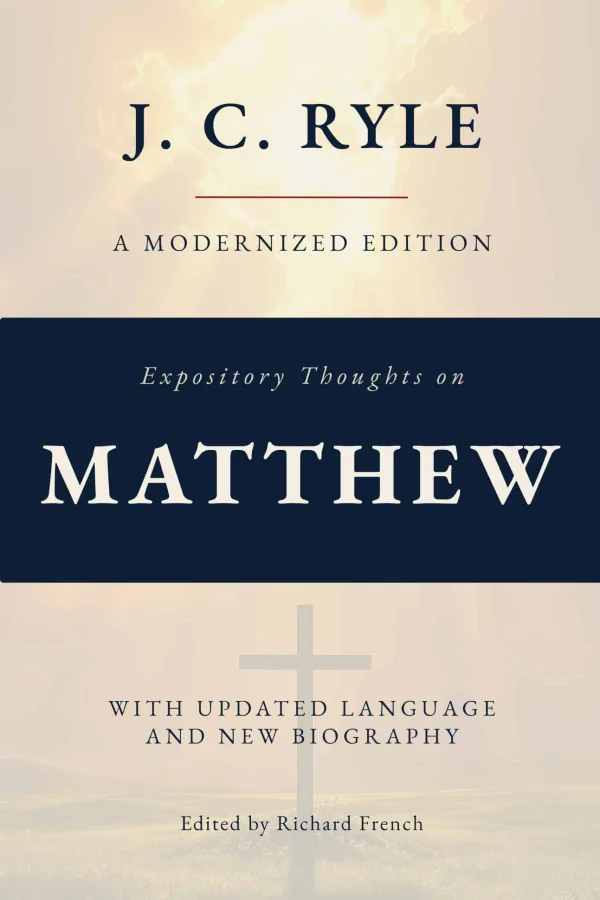
Key Evidence: As J. C. Ryle writes, "They long not so much to be rich, or wealthy, or learned, as to be holy." (Expository Thoughts on Matthew, on Matthew 5:1-12)
Context: The passage opens with "Therefore" in 6:25 and flows from Jesus' warning that no one can serve both God and Mammon (WEB Matthew 6:24).
This passage functions as the practical outworking of the Lord's Prayer, answering the petition for daily bread with a call to trust the Father who already knows our needs. It exposes anxiety as a question of loyalty and offers a different object for our seeking. The sections below walk through the text from the choice of masters through the birds and lilies to the central command, and close with what it means for readers carrying real burdens today.
Key Takeaways
- Anxious worry: The Greek verb merimnaō describes a divided, consuming concern, not ordinary forethought or diligent work.
- The Father's care: Birds, lilies and grass display a heavenly Father who feeds and clothes what he has made.
- Little faith: Jesus speaks gently to real disciples whose trust is still small, inviting growth rather than condemning unbelief.
- Kingdom priority: "Seek first" is a present imperative, a continual and settled pursuit of God's reign.
- Daily necessities: "All these things" refers to food, drink and clothing, given as a Father's gift, not wealth or luxury.
What Does It Mean to Seek First the Kingdom in Matthew 6:25-34?
Seek first the kingdom is the hinge command of this whole section, and the verses around it build the case for why it matters. Verse 25 argues from greater to lesser: "Therefore I tell you, don’t be anxious for your life: what you will eat, or what you will drink; nor yet for your body, what you will wear. Isn’t life more than food, and the body more than clothing?" (WEB Matthew 6:25). The God who gave life and body in the first place can be trusted with what sustains them day to day.
Verse 26 calls hearers to look intently at the birds, using a word (emblepsate) that means something closer to "study" than a passing glance: "Your heavenly Father feeds them. Aren't you of much more value than they?" (WEB Matthew 6:26). Then verses 32-33 contrast the Gentiles' frantic seeking (epizēteō) with the disciple whose Father already knows every need before it's named. The answer to anxious seeking is a better seeking, aimed at God's reign (basileia) and righteousness (dikaiosynē).
Seek first the kingdom in Matthew 6:33 replaces anxious striving for necessities with a continual pursuit of God's reign and the life that pleases him. He condemns the distrustful, anxious care that wears out the heart and robs God of the confidence he deserves.
Consider the Lilies: Matthew 6:28-30
Jesus turns from food to clothing, pointing to the wildflowers scattered across the Galilean hillsides each spring.
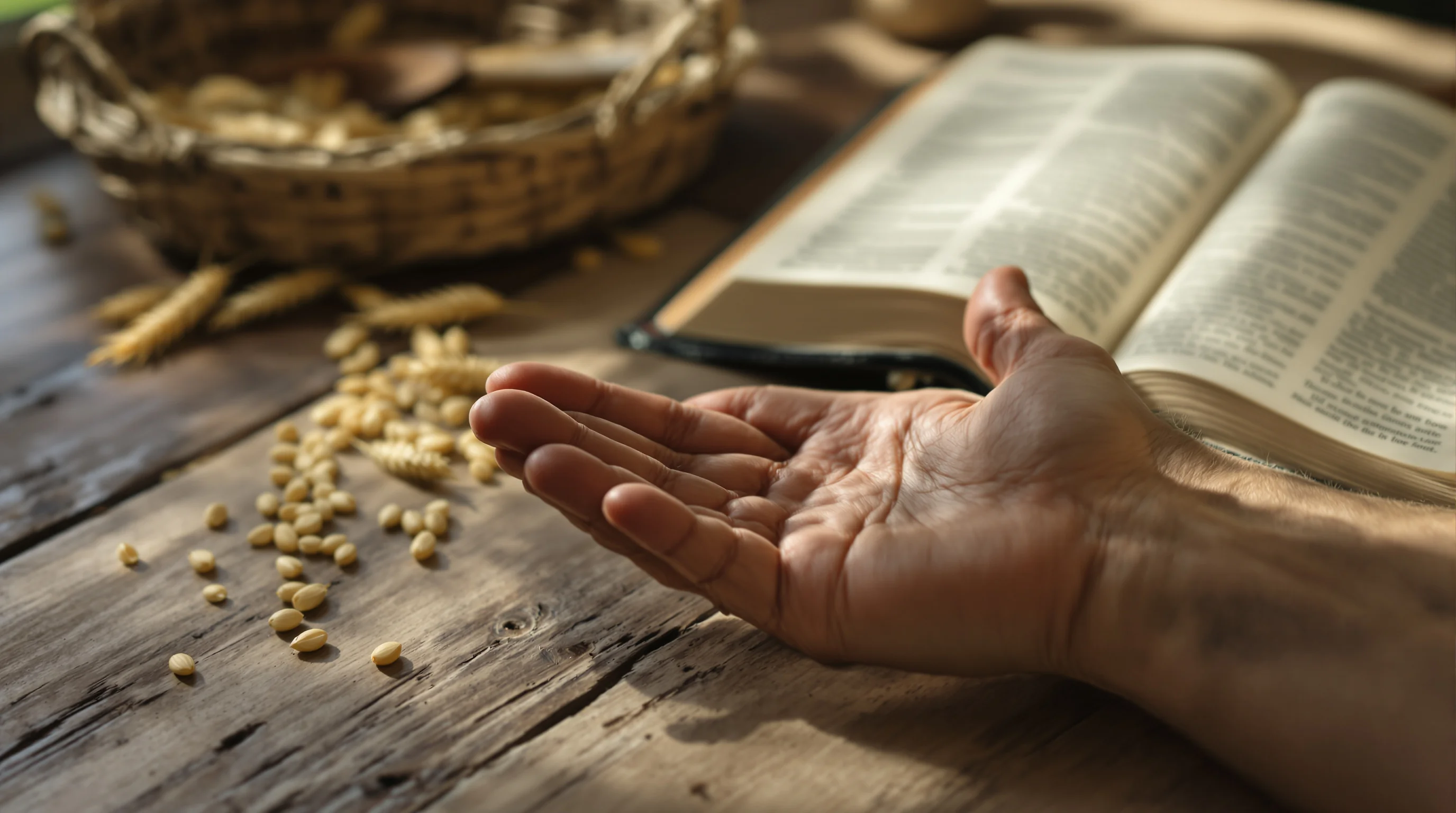
- Solomon outshone: "Consider the lilies of the field, how they grow. They don't toil, neither do they spin, yet I tell you that even Solomon in all his glory was not dressed like one of these." (WEB Matthew 6:28-29)
- Grass in the oven: God clothes grass that lives one day and is burned the next, and will "much more clothe you, you of little faith" (WEB Matthew 6:30).
How Treasure and Masters in Matthew 6:19-24 Lead Into the Worry Passage
If God alone is Master and heaven the true treasury, anxiety about earthly supply loses its grip on the heart. Jesus has already framed the choice: "You can't serve both God and Mammon." (WEB Matthew 6:24). Mammon means wealth or property, whatever a person trusts to secure their own future.
Worry about provision in Matthew 6 is a question of loyalty, revealing which master and which treasure rule the heart. Anxiety can quietly serve Mammon, treating material security as something we must guarantee for ourselves rather than receive as a gift. This connects back to the Lord's Prayer, where "Your Kingdom come" and "Give us today our daily bread" (WEB Matthew 6:10-11) stand behind everything Jesus says here about worry and trust.
Treasures in Heaven: Matthew 6:19-21
Jesus begins his teaching on possessions by setting two storehouses side by side.
- Two storehouses: "Don't lay up treasures for yourselves on the earth, where moth and rust consume, and where thieves break through and steal; but lay up for yourselves treasures in heaven" (WEB Matthew 6:19-20)
- The heart follows: "for where your treasure is, there your heart will be also." (WEB Matthew 6:21)
Understanding Worry and Trust in Their First-Century and Old Testament Setting
In Jesus' day clothing was costly, since cloth was spun and woven by hand, which makes the comparison to wildflowers all the more striking.
Old Testament background stands behind the teaching at every point. The manna in the wilderness taught Israel to receive bread one day at a time (WEB Exodus 16). Psalm 147:9 celebrates the God who "He provides food for the livestock, and for the young ravens when they call." (WEB Psalm 147:9), and Psalm 55:22 calls God's people to cast their burden on Yahweh. In context, Jesus is calling Israel back to this covenant trust, now in light of the kingdom he has already announced (WEB Matthew 4:17).
Luke's parallel account adds a tender line worth holding onto: "Don't be afraid, little flock, for it is your Father's good pleasure to give you the Kingdom" (WEB Luke 12:32). Jesus spoke Matthew 6:25-34 to people with real needs, so it is a word of costly trust, not a comfortable platitude.
Why Seek First the Kingdom Matters for Christians Today
Seek first the kingdom matters today because disciples still face the same temptation to let worry set the agenda. The kingdom itself is the goal, and the added things are a gift, not a bargain.
In daily life, this looks like praying about needs rather than only rehearsing them, doing today's work faithfully, and taking each day's duties as they come: "Each day's own evil is sufficient." (WEB Matthew 6:34). Paul describes the same pattern in Philippians 4:6, prayer joined with thanksgiving instead of anxious rehearsal.
It's worth guarding against two misreadings. The birds in verse 26 still search for food, and Scripture elsewhere commends diligent work (WEB 2 Thessalonians 3:10-12), so this passage never excuses idleness. Nor is it a promise of wealth. The same Gospel shows faithful disciples facing poverty and persecution (WEB Matthew 5:10-12; 8:20), so the promise covers necessities, not comfort or ease. If anxiety is a struggle you carry in body and mind, seeking wise counsel, medical help and the support of fellow believers fits comfortably within this text and with 1 Peter 5:7.
Anxiety shrinks life to the size of our fears, and the kingdom of God enlarges it. The King who calls us to seek his reign is the same Son who reveals the Father's care at every turn. For readers who want to trace this theme further, the Sermon on the Mount guide shows how Jesus grounds trust in the Father's goodness again in the verses on asking, seeking and knocking in Matthew 7:7-11.
What J. C. Ryle Says About Seeking God's Righteousness
Ryle's comments on the Beatitudes shed light on what "righteousness" means in the command to seek first the kingdom.
The Lord Jesus calls those blessed, who *hunger and thirst after righteousness.* He means those who desire above all things to be entirely conformed to the mind of God. They long not so much to be rich, or wealthy, or learned, as to be holy. Blessed are all such ! They shall have enough one day. They shall " awake up after God's likeness and be satisfied." *(Psalm 17:15)*.
J. C. Ryle, Expository Thoughts on Matthew, on Matthew 5:1-12 (modernized edition, Indie Pen Press).
Ryle defines hunger for righteousness as a longing to be entirely conformed to God's mind, which illuminates what Jesus means by "his righteousness" in Matthew 6:33. The satisfaction he describes is future and spiritual, an awaking in God's likeness, which keeps the kingdom's promise centered on God himself rather than on earthly comfort. This same longing shapes the Beatitudes in Matthew 5:1-12, where blessedness and righteousness are already joined together.
Why This Passage Matters
Matthew 6:25-34 exposes worry as a matter of trust and loyalty, then answers it with the character of the heavenly Father. Believers carrying real burdens about money, health or tomorrow find both comfort and a summons to reorder their priorities. The passage shows the grace of a Father who provides and the discipleship of children who seek his reign above all else.
Conclusion
To seek first the kingdom is to let God's reign and righteousness set the order of your life, trusting the Father who feeds birds and clothes lilies with the same care he gives his children's daily needs. Jesus calls weak believers "you of little faith" as a gentle invitation, and he says it to you too. If worry visits you again tomorrow, you haven't failed. Look again at the birds, bring the need to your Father, and take one day at a time, just as he taught.
For a deeper passage-by-passage exploration of Matthew's Gospel, see J. C. Ryle's Expository Thoughts on the Gospels: Matthew (modernized edition) and the accompanying Matthew workbook. And if you'd like to keep working through the Sermon on the Mount, Sermon on the Mount Explained: A Verse-by-Verse Guide will carry you forward into Matthew 7 and Jesus' teaching on judging others.