When Jesus finished speaking, "the multitudes were astonished at his teaching, for he taught them with authority, and not like the scribes" (WEB Matthew 7:28-29). The crowds sensed that this teacher was unlike any other they had heard. The sermon on the mount is the longest block of Jesus' recorded teaching, and it may be the most quoted and least studied passage by passage. This guide walks through Matthew 5 to 7 in order, showing the structure, the setting, and the central claims of Jesus' kingdom manifesto. If you have ever felt that this sermon sets a standard too high to reach, you are reading it the way Jesus' first hearers did. The sermon on the mount describes the transformed character of those who already belong to Jesus.
Quick Answer: The sermon on the mount is Jesus' extended teaching in Matthew 5 to 7 on the character, righteousness, and daily life of citizens of God's kingdom. It opens with the Beatitudes, interprets the moral law at the level of the heart, addresses prayer, giving, money, and anxiety, and closes by demanding obedient faith.
Definition: The sermon on the mount in the Gospels represents Jesus' basic teaching on kingdom righteousness, covering true blessedness, the heart of the law, and authentic devotion to God.
Key Scripture: "For I tell you that unless your righteousness exceeds that of the scribes and Pharisees, there is no way you will enter into the Kingdom of Heaven" (WEB Matthew 5:20).
Key Evidence: As J. C. Ryle writes, "Humility is the very first letter in the alphabet of Christianity. We must begin low, if we would build high." (Expository Thoughts on Matthew, on Matthew 5:1-12)
Context: Jesus addresses disciples first, with the crowds listening in (WEB Matthew 5:1; 7:28), so the sermon describes life under His lordship rather than a general code of ethics.
Think of this sermon as both portrait and summons. Its purpose is to show the kind of character that no outward rule-keeping can produce on its own. It functions by first describing who is blessed, then by calling hearers to hear these words and actually do them. The implication is hopeful: the life Jesus describes grows from belonging to Him, not from striving alone. The sections below walk through its three movements, set it in its first-century context, and consider what it asks of readers today.
Key Takeaways
- Structure: The sermon on the mount spans Matthew 5 to 7 as the first of five major teaching discourses in Matthew's Gospel.
- Beatitudes: Jesus opens by pronouncing blessing on the poor in spirit, the mourning, the meek, and the persecuted (WEB Matthew 5:3-12).
- Fulfillment: Jesus upholds the Law and brings it to its intended fullness (WEB Matthew 5:17).
- Heart righteousness: The repeated "you have heard... but I tell you" formula exposes the inward intent behind the commands (WEB Matthew 5:21-48).
- Obedience: The closing parable of the two builders ties hearing to doing (WEB Matthew 7:24-27).
What the Sermon on the Mount Says, Chapter by Chapter
The sermon on the mount moves in three movements: kingdom character in Matthew 5, kingdom devotion in Matthew 6, and kingdom discernment in Matthew 7. Matthew 5 opens with the Beatitudes: "Blessed are the poor in spirit, for theirs is the Kingdom of Heaven" (WEB Matthew 5:3). Next come the salt and light sayings and six contrasts on murder, adultery, divorce, oaths, retaliation, and love of enemies. The whole chapter turns on verse 17: "Don't think that I came to destroy the law or the prophets. I didn't come to destroy, but to fulfill" (WEB Matthew 5:17).
Matthew 6 turns to giving, prayer, and fasting done before the Father rather than before an audience (WEB Matthew 6:1-18). It then moves to money and worry, climaxing in a single priority: "But seek first God's Kingdom and his righteousness; and all these things will be given to you as well" (WEB Matthew 6:33). Matthew 7 covers judging rightly, asking the Father, the narrow gate, false prophets, and the parable of the two builders (WEB Matthew 7:24).
It's fine if this much material feels like a lot at first. Faithful readers have wrestled with these chapters for centuries, and there is no shame in taking them one section at a time.
The Beatitudes in Brief
Jesus names eight marks of the blessed life before giving a single command.

- Inward poverty: The blessed begin by owning their spiritual bankruptcy (WEB Matthew 5:3).
- Hunger for righteousness: Ryle describes these as people who long to be holy more than wealthy or learned, on Matthew 5:1-12.
- Cost: Persecution for righteousness' sake is counted as blessing, not tragedy (WEB Matthew 5:10-12).
Understanding the Sermon in Its First-Century Context
Matthew 4:23-25 summarizes Jesus' Galilean ministry and the crowds it gathered, and the sermon on the mount supplies the teaching content behind those reports. Matthew 7:28-29 then records the crowd's response.
This sermon is the first of five discourses in Matthew, each closing with a set formula, part of Matthew's larger presentation of Jesus against the backdrop of Moses and the promised prophet of Deuteronomy 18:15. Many of Jesus' first hearers were poor, taxed, and under political pressure.
The scribes and Pharisees represented the dominant religious authority of the day, and public almsgiving, prayer, and fasting were established markers of piety, which is exactly what Matthew 6:1-18 addresses. The Beatitudes draw on the blessing language of Psalm 1:1 and Psalm 37:11, and the command to love enemies extends Leviticus 19:18 beyond its original scope. Jesus purifies the religious categories His hearers already knew, redirecting their motive from human praise to the Father's approval.
Who Was Listening?
Matthew carefully distinguishes two groups in the crowd on the mountainside.
- Disciples: They come to Him first and form the primary audience (WEB Matthew 5:1).
- Crowds: They overhear and are astonished at His authority (WEB Matthew 7:28-29).
- Why it matters: The sermon describes the life of those already following Jesus, not a universal code imposed from outside relationship with Him.
Why the Sermon on the Mount Matters for Christians Today
The sermon on the mount gives believers a standard for self-examination that reaches past behavior into motive. The righteousness Jesus requires in Matthew 5:20 exceeds anything willpower produces on its own, which drives the honest reader toward grace and toward the Christ who fulfills the Law in full. Maybe you have wondered whether an ancient sermon has anything practical to say about ordinary anxieties. It does: examine your giving, prayer, and fasting for performance before people rather than devotion before the Father (WEB Matthew 6:1-18), bring worry about provision to Him directly (WEB Matthew 6:33), and choose mercy toward enemies over retaliation (WEB Matthew 5:38-48).
One common misreading treats the sermon as a self-help code separated from Christ, which produces either despair or pride. Another isolates "Don't judge" (WEB Matthew 7:1) from the careful discernment Jesus teaches just a few verses later. Taken together, the sermon describes the fruit that Christ's grace produces in those united to Him, and the parable of the two builders makes hearing and doing inseparable (WEB Matthew 7:24-27). For readers wanting to trace this theme across the whole Gospel, J. C. Ryle's Expository Thoughts on the Gospels works through each passage in its immediate context.
What J. C. Ryle Says About the Sermon on the Mount
Ryle reads the Beatitudes as a mirror, asking readers to measure themselves against the character Jesus describes before He gives a single command.
Would we know what kind of people Christians ought to be ? Would we know the character at which Christians ought to aim ? Would we know the outward walk and inward habit of mind which become a follower of Jesus ? Then let us often study the sermon on the mount. Let us often ponder each sentence, and prove ourselves by it. Not least let us often consider who they are that are called blessed at the beginning of the sermon. Those whom the great High Priest blesses are blessed indeed. The Lord Jesus calls those blessed, who are poor in spirit. He means the humble, and lowly-minded, and self-abased. He means those who are deeply convinced of their own sinfulness in God's sight. These are they who are not " wise in their own eyes and holy in their own sight." They are not " rich and increased with goods." They do not fancy they need nothing. They regard themselves as " wretched, and miserable, and poor, and blind, and naked." Blessed are all such ! Humility is the very first letter in the alphabet of Christianity. We must begin low, if we would build high.
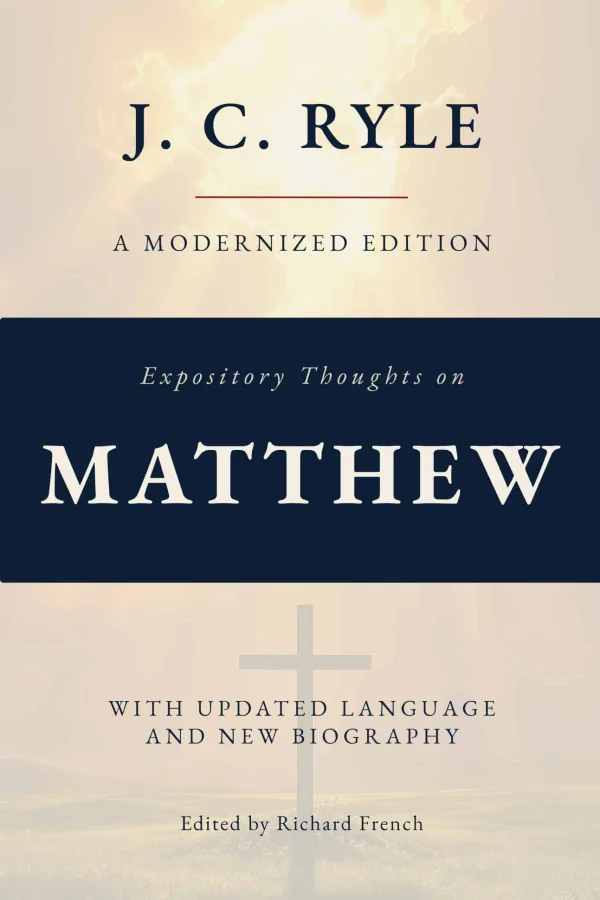
J. C. Ryle, Expository Thoughts on Matthew, on Matthew 5:1-12 (modernized edition, Indie Pen Press).
Ryle draws out a point easy to miss on a quick reading: the sermon begins with self-assessment rather than instruction. Before Jesus tells His hearers what to do, He describes who is already blessed, and humility sits at the entrance to that list. As Ryle observes, Christ's principles stand opposed to the world's instincts at nearly every point, which is itself worth sitting with.
Why This Passage Matters
Matthew 5 to 7 remains the clearest portrait of what Jesus expects of those who follow Him. It speaks to anxiety, money, anger, relationships, and religious performance in ordinary life, not abstract theology alone. It humbles the reader, points to the sufficiency of Christ, and calls disciples toward practical obedience rather than mere agreement.
Conclusion
The sermon on the mount is Jesus' authoritative description of kingdom life, moving from the Beatitudes through the parable of the two builders and calling for a righteousness that begins in the heart. It's okay to find parts of this teaching searching and hard; that discomfort is part of what draws you toward dependence on Christ rather than on your own effort. Read it slowly, one passage at a time, and let it show you where you need grace. Then bring that need to the one who fulfills it on your behalf, and take heart: He is the one who builds the life you are trying to live. For a deeper passage-by-passage exploration of the Gospels' teaching and structure, see J. C. Ryle's Expository Thoughts on the Gospels (modernized edition) and the Gospel study workbooks.