Maybe you have read Luke 6 and noticed something familiar, yet slightly different. "Blessed are you who are poor" sounds like Matthew, but it is spoken on "a level place" (WEB Luke 6:17) rather than a mountain. That difference leads many readers to ask whether the Sermon on the Mount is only in Matthew. It is a fair question, and it is okay to feel unsure about how the two accounts fit together.
The short answer is no. Is the Sermon on the Mount only in Matthew? The complete three-chapter version is found there alone, while Luke 6 preserves a shorter parallel with the same core teaching. The Sermon on the Mount is not two unrelated speeches that happen to share some lines. It specifically represents one body of teaching, recorded by two evangelists for two different audiences.
Let's look at how the settings, structure, and wording compare, what interpreters say about the differences, and what both sermons ask of disciples today.
Quick Answer: The full Sermon on the Mount appears only in Matthew 5-7, and Luke 6:17-49 records a shorter parallel called the Sermon on the Plain. Both open with blessings and teach love for enemies, mercy, the two trees, and the two builders. Luke places many other sayings, including the Lord's Prayer, elsewhere in his Gospel.
Definition: The Sermon on the Mount in the Gospels represents Jesus' basic teaching on kingdom righteousness, given in full in Matthew 5-7 and in a shorter parallel form in Luke 6:17-49.
Key Scripture: "He came down with them, and stood on a level place, with a crowd of his disciples, and a great number of the people..." (WEB Luke 6:17)
Key Evidence: As J. C. Ryle writes, "Every word of the Lord Jesus ought to be most precious to professing Christians" (Expository Thoughts on Matthew, on Matthew 5:1-12).
Context: Both accounts end with Jesus finishing his words and entering Capernaum (WEB Matthew 7:28-8:5; Luke 7:1), which supports reading them as the same core teaching.
These two passages show readers what life in God's kingdom looks like, from the inside out. Matthew's fuller account and Luke's compact version each serve their first readers, shaping how disciples hear Jesus' call to mercy and obedience. The sections below compare the settings and wording, survey how interpreters explain the differences, and consider what both versions ask of you today.
Key Takeaways
- Shared core: Both sermons contain blessings, love for enemies, teaching on judging, the two trees, and the two builders.
- Different settings: Matthew places Jesus seated on a mountain (WEB Matthew 5:1). Luke places him standing on a level place (WEB Luke 6:17).
- Distinct emphasis: Matthew's "poor in spirit" stresses inward humility. Luke's "you who are poor" addresses disciples in real want and adds four woes.
- Scattered sayings: Luke records the Lord's Prayer (11:2-4) and teaching on anxiety (12:22-31) in other settings.
- One message: Interpreters debate whether this was one occasion or two, and they agree the content is consistent.
Is the Sermon on the Mount Only in Matthew? What the Bible Says
Is the Sermon on the Mount only in Matthew? The complete three-chapter discourse belongs to Matthew 5-7 alone, while Luke 6:17-49 gives a compact parallel of about thirty verses. Matthew tells us, "Seeing the multitudes, he went up onto the mountain. When he had sat down, his disciples came to him." (WEB Matthew 5:1).
Luke's setting unfolds in stages. Jesus prays on the mountain (6:12), chooses the Twelve (6:13-16), and then comes down to a level place where the crowd gathers (6:17). Both accounts share the same closing frame: Jesus finishes his words and goes on to heal a centurion's servant in Capernaum (Matthew 8:5-13; Luke 7:1-10). This shared ending is one reason many readers take the two as describing the same body of teaching.
Where Luke Places the Rest of Matthew's Sayings
Many sayings gathered together in Matthew's sermon appear scattered through Luke's Gospel, often tied to a particular question or moment.

- Lord's Prayer: Luke 11:2-4, given when a disciple asks Jesus to teach them to pray.
- Anxiety and treasure: Luke 12:22-34, where Jesus teaches trust in the Father's provision.
- Narrow door: Luke 13:24, given in answer to a question about who will be saved.
Mountain and Level Place: Comparing the Settings and Structures
Matthew's sermon unfolds as a long, ordered discourse: the Beatitudes, salt and light, fulfillment of the Law (5:17-48), practices of righteousness (6:1-18), trust in God (6:19-34), relationships (7:1-12), and closing warnings (7:13-27). Luke's version moves through five compact sections: blessings and woes (6:20-26), love for enemies (6:27-36), judging (6:37-42), good fruit (6:43-45), and the two builders (6:46-49).
The settings carry Old Testament weight. Matthew's mountain echoes Sinai (Exodus 19-24), presenting Jesus as the one who fulfills the Law (Matthew 5:17). Luke's blessings and woes recall the covenant blessings and curses of Deuteronomy 27-28, a pattern his first readers would recognize.
Notice how the two Gospels describe the same standard in different words. Luke's "Therefore be merciful, even as your Father is also merciful." (WEB Luke 6:36) sits beside Matthew's "Therefore you shall be perfect, just as your Father in heaven is perfect" (WEB Matthew 5:48). Luke's wording clarifies what Matthew means by "perfect," since both verses follow teaching on loving enemies. Both Gospels ground the disciple's ethic in the character of God the Father.
You can explore this teaching in full in the Sermon on the Mount explained passage by passage.
Blessings and Woes Side by Side
Luke pairs four blessings with four matching woes, a prophetic pattern drawn from Deuteronomy's blessings and curses.
- Blessing: "He lifted up his eyes to his disciples, and said: Blessed are you who are poor, for God’s Kingdom is yours." (WEB Luke 6:20).
- Woe: "But woe to you who are rich! For you have received your consolation." (WEB Luke 6:24).
- Background: Both evangelists draw on Isaiah 61:1, the good news to the poor that Jesus read at Nazareth (Luke 4:18).
One Sermon or Two? How Interpreters Explain the Differences
Interpreters across traditions agree on the main point: the core content of both sermons is the same, and Jesus is the authoritative teacher in each. Where they differ is on the setting itself. Some read one sermon reported at different lengths, noting that a "level place" could describe a plateau partway up a mountainside. Faithful readers have wrestled with this question for centuries, and there is no shame in holding your view with humility.
The differences between Matthew 5-7 and Luke 6 reflect each evangelist's emphasis, and their accounts agree in substance.
Three Interpretive Approaches
Three main approaches shape how readers relate the two sermons to one another.
- Historical-grammatical and harmonistic: Both are accurate accounts, read as one sermon summarized differently or as two separate occasions.
- Redaction-critical: Each writer arranged a common body of sayings for his own purpose; some evangelicals adopt this view, and others question the underlying source theory.
- Literary-narrative: Each sermon is read within its own Gospel's unfolding story.
Is the Sermon on the Mount Only in Matthew's Message? Why Luke's Version Matters Today
Is the Sermon on the Mount only in Matthew's message to disciples? Reading both accounts together gives a fuller picture of what Jesus asks of those who follow him. Luke presses the point directly: "Why do you call me, ‘Lord, Lord,’ and don’t do the things which I say?" (WEB Luke 6:46). Both accounts close with the same image, a builder who either hears and acts or hears and does nothing (Matthew 7:24-27; Luke 6:46-49).
The purpose of this pairing is practical. Matthew gives the full vision of kingdom righteousness, and Luke sharpens it with direct address and warning. Together they call each hearer to examine where they are building. The promise attached is steady: a life built on Jesus' words stands when the storm comes.
There is real comfort here. Jesus blesses the poor, the hungry, the grieving, and the persecuted, and promises them the kingdom. There is also real challenge. Luke's woes warn against trusting in wealth, comfort, or reputation, and Matthew's call to a righteousness that exceeds outward religion (5:20) searches the heart, not just behavior.
A few habits help readers hold these texts together well. Receive the sermon as the shape of a life already welcomed by grace in Christ, rather than a ladder to climb toward acceptance. Read Matthew and Luke as complementary witnesses, holding together Luke's literally poor and Matthew's "poor in spirit." Pair "do not judge" (Luke 6:37) with the call to discern good fruit (Luke 6:43-45), rather than letting one cancel the other.
The Father's mercy is both the standard and the source. Disciples imitate a mercy they first receive through Jesus, and both sermons call them to an obedience that flows from trust in his authority.
What J. C. Ryle Says About the Sermon on the Mount
Ryle notices that the sermon is a standard by which every believer's character should be tested, as well as a historical record.
Would we know what kind of people Christians ought to be? Would we know the character at which Christians ought to aim? Would we know the outward walk and inward habit of mind which become a follower of Jesus? Then let us often study the sermon on the mount. Let us often ponder each sentence, and prove ourselves by it. Not least let us often consider who they are that are called blessed at the beginning of the sermon. Those whom the great High Priest blesses are blessed indeed.
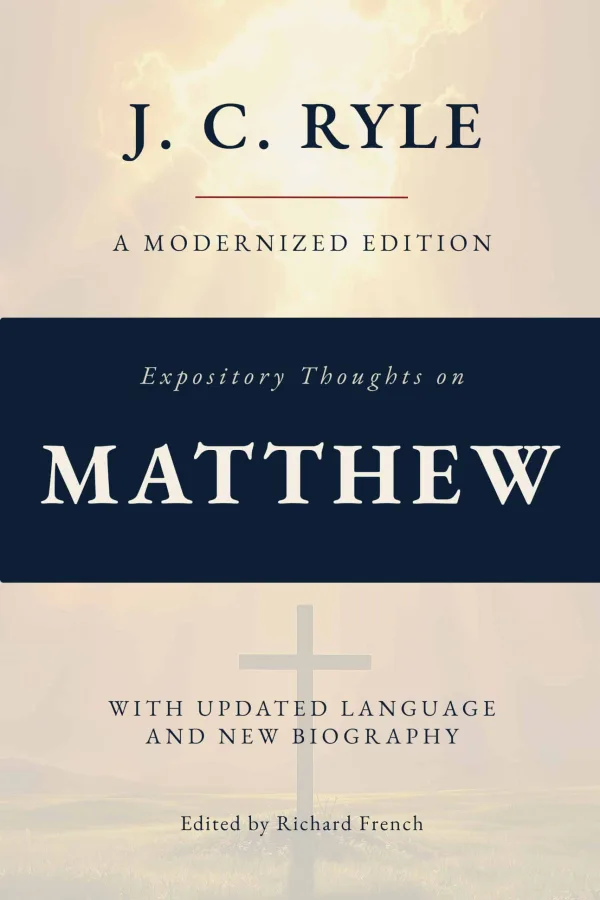
J. C. Ryle, Expository Thoughts on Matthew, on Matthew 5:1-12 (modernized edition, Indie Pen Press).
Ryle treats the sermon as a mirror for self-examination, a passage to live under and not merely admire. That blessing from the great High Priest carries weight, which connects naturally to Luke's direct address, "Blessed are you who are poor," spoken straight to disciples.
Why This Passage Matters
Both sermons show Jesus as the authoritative teacher whose words form the foundation of a stable life. Readers today face the same choice as the two builders: admire the teaching, or act on it. Ryle presses the same point, writing that "Christianity is eminently a practical religion. Sound doctrine is its root and foundation, but holy living should always be its fruit" (J. C. Ryle, Expository Thoughts on Matthew, on Matthew 5:1-12). Grace forms disciples who show the Father's own mercy to others.
Conclusion
So, is the Sermon on the Mount only in Matthew? The full discourse belongs to Matthew 5-7, while Luke 6:17-49 preserves its core, and Luke records other sayings from it in later chapters. The two accounts agree in substance. They differ in setting, length, and emphasis, and each serves its first readers well.
If you have ever felt a little lost comparing the Gospels, take heart: the differences invite you closer, not away. Read both together. Let Luke's blessings comfort you when you are weary and his woes humble you when you feel secure. Let Matthew's call to a righteousness of the heart lead you deeper into trust in Christ. For a passage-by-passage exploration of the Gospels' teaching, see J. C. Ryle's Expository Thoughts on the Gospels (modernized edition) and the Gospel study workbooks.