Who wrote the Gospel of Mark? The earliest church testimony answers with a name that might surprise you: John Mark, a man who once abandoned a missionary journey (WEB Acts 13:13) and was later called "useful" by the very apostle who had refused to travel with him again (WEB 2 Timothy 4:11). This article is part of our Famous Gospel Passages series, where we look at the people and testimony behind each Gospel narrative.
Knowing who wrote the Gospel of Mark tells us whose testimony stands behind the shortest and fastest-moving account of Jesus' ministry. The Gospel of Mark preserves the preaching of an eyewitness apostle, written down by a companion the church trusted from the beginning.
Maybe you've wondered whether it even matters who wrote an ancient book like this. It's okay to ask; the question shapes how we read every page that follows. We'll walk through the New Testament portrait of John Mark, the early testimony about Peter's preaching, the likely date and Roman audience, Mark's brief and urgent style, and a short note on the Gospel's longer ending.
Quick Answer: The author of the Gospel of Mark is John Mark, a Jerusalem believer, cousin of Barnabas, and companion of both Paul and Peter. The Gospel itself is formally anonymous. Early church testimony, beginning with Papias, says Mark recorded Peter's preaching about Jesus, likely in Rome for Gentile believers facing pressure.
Definition: The authorship of Mark in the Gospels refers to the traditional attribution of the second Gospel to John Mark, who wrote down the apostle Peter's testimony about Jesus for believers in Rome.
Key Scripture: "She who is in Babylon, chosen together with you, greets you. So does Mark, my son." (WEB 1 Peter 5:13)
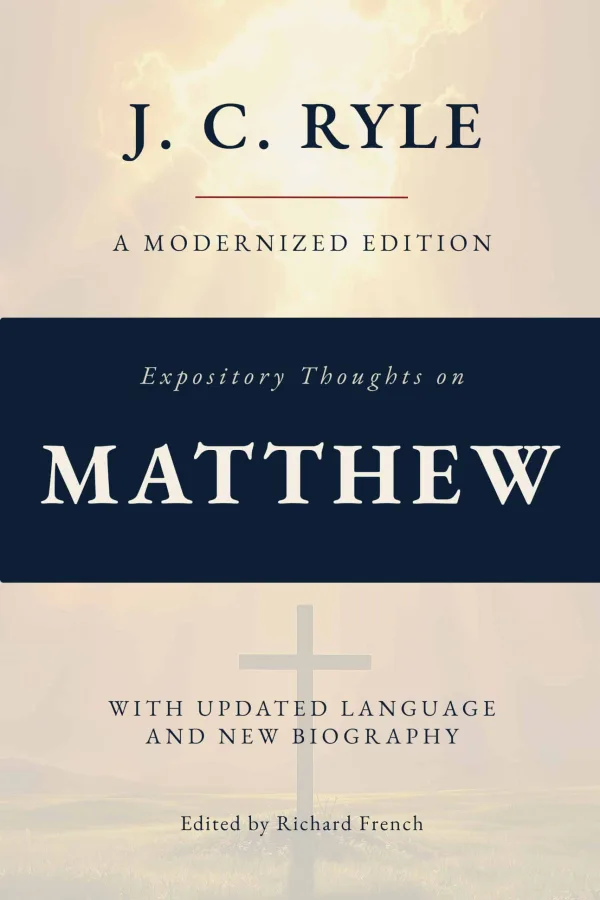
Key Evidence: As J. C. Ryle writes, "Of all the four inspired histories of our Lord's earthly ministry, this is by far the shortest." (Expository Thoughts on Mark, on Mark 1:1-8)
Context: Mark wrote in the decades after Jesus' ascension, most likely in Rome, drawing on the preaching of Peter (WEB 1 Peter 5:13) for Gentile believers who needed a trustworthy account of Jesus' suffering and resurrection.
This Gospel exists because the early church valued Peter's firsthand memory of Jesus and wanted it preserved beyond his lifetime. Mark's role was to set that testimony into a lasting written form for believers who could no longer hear Peter preach in person. The result shaped how the whole church would come to know Christ's words and works. The sections below walk through the biblical evidence for Mark's identity, the early testimony connecting him to Peter, the likely setting in Rome, and what his brief, urgent style tells us about his purpose.
Key Takeaways
- John Mark: The church's earliest testimony names John Mark of Jerusalem (WEB Acts 12:12) as the author.
- Roman audience: Mark explains Jewish customs (WEB Mark 7:3-4) for Gentile readers, consistent with a Roman setting.
- Brevity and urgency: Ryle calls Mark's style "simple, terse, pithy, and condensed" (Ryle, on Mark 1:1-8).
- Restored servant: Mark's own failure and restoration (WEB Acts 15:37-38; WEB 2 Timothy 4:11) shows Christ's grace toward imperfect servants.
What Does the Bible Say About Who Wrote the Gospel of Mark?
Who wrote the Gospel of Mark, according to the New Testament itself? The New Testament never says Mark wrote a Gospel, but it gives a consistent portrait of the man the church credits as author. Mark's mother, Mary, hosted the praying Jerusalem church in her home, and Peter went straight there after his release from prison (WEB Acts 12:12). "John" was his Jewish name and "Mark" (Latin Marcus) his Roman one, a pattern similar to Saul becoming Paul.
Mark traveled with Paul and Barnabas on early missionary work, then "departed from them and returned to Jerusalem" (WEB Acts 13:13). The text gives no reason for this, so we should resist the urge to guess beyond what it says. Later, Paul writes with striking warmth, "Take Mark, and bring him with you, for he is useful to me for service" (WEB 2 Timothy 4:11), using the Greek word euchrēstos, meaning useful or serviceable.
Peter himself calls him "Mark, my son" (WEB 1 Peter 5:13), the strongest New Testament link between the two men.

Peter's Testimony and the Early Church Witness
The early church passed down a specific claim about who wrote the Gospel of Mark: that Mark was a faithful transmitter of Peter's preaching. The evidence leaves the exact mechanism open.
No rival author for this Gospel has survived from the ancient church. That matters, since Mark was not an apostle, and the church had little reason to credit him unless the tradition was firmly rooted. All four Gospels are formally anonymous, which was ordinary for ancient narrative writing.
Mark also records Peter's failures with striking candor, which makes sense if Peter's own preaching stands behind the account. Early church tradition consistently presents the Gospel of Mark as Peter's eyewitness preaching preserved by John Mark. For another Gospel text with its own setting, see our guide to the Sermon on the Mount and its place within Matthew's Gospel.
When and Why Mark Wrote for Believers in Rome
The Gospel explains Jewish washing customs for its readers (WEB Mark 7:3-4), which fits a Jewish-born author writing for a largely Gentile audience unfamiliar with such practices.
Mark also names Simon of Cyrene as "the father of Alexander and Rufus" (WEB Mark 15:21), assuming readers who personally knew these two men. From its first verse, the Gospel presents Jesus as "The beginning of the Good News of Jesus Christ, the Son of God." (WEB Mark 1:1), and it opens with words drawn from Malachi and Isaiah (WEB Mark 1:2-3), presenting Jesus as the fulfillment the Prophets had long announced. Mark wrote to give pressured Roman believers a trustworthy account of the suffering and risen Son of God.
Mark's Brevity, Urgency, and the Longer Ending
Often one story sits inside another, as when the healing of a bleeding woman interrupts the raising of Jairus's daughter (WEB Mark 5:21-43). The Gospel records the disciples' dullness and failures without softening them, which fits a restored author working from a humbled apostle's testimony. Mark's brief, vivid, action-driven style presents Jesus as the Son of God who acts with authority and moves steadily toward the cross.
A Note on Mark 16:9-20
Readers sometimes notice a bracket or footnote near the end of Mark's Gospel. Seeing it can feel unsettling, but faithful readers have wrestled with this question for centuries, and there's no shame in asking about it.
- Translations: Most modern Bibles print the longer ending with an explanatory note.
- Authorship: Scholars discuss whether these verses come from Mark himself, though this question does not affect the attribution of the Gospel as a whole.
What J. C. Ryle Says About Mark 1:1-8
Ryle sees Mark's brevity as a distinct strength of the Gospel.
But we must not allow these peculiarities to make us undervalue St. Mark's Gospel. It is a Gospel singularly full of precious facts about the Lord Jesus, narrated in a simple, terse, pithy, and condensed style. If it tells us few of our Lord's sayings, it is eminently rich in its catalogue of His doings. It often contains minute historical details of deep interest, which are wholly omitted in Matthew, Luke and John. In short, it is no mere abridged copy of St. Matthew, as some have rashly asserted, but the independent narrative of an independent witness, who was inspired to write a history of our Lord's works, rather than of His words.
J. C. Ryle, Expository Thoughts on Mark, on Mark 1:1-8 (modernized edition).
Ryle draws out that Mark's condensed style and distinctive historical details make it a valuable witness in its own right, not a shortened copy of Matthew. He affirms Mark as an independent, inspired account and urges readers to receive every word with reverence, as given by God for our profit.
Why This Passage Matters
Knowing who wrote the Gospel of Mark gives believers confidence that they are reading a preserved witness rooted in Peter's testimony, not a vague or secondhand rumor. Mark's own story, moving from failure in Pamphylia to usefulness in Rome, encourages anyone who has failed in Christian service. Failure need not be final in Christ's work. The Gospel's opening confession of Jesus as "the Son of God" (WEB Mark 1:1) points every reader toward the Savior who restores weak disciples and makes them useful again.
Conclusion
So who wrote the Gospel of Mark? The earliest and most consistent testimony points to John Mark, Peter's companion in Rome and Paul's once-rejected, later-restored coworker, who wrote down Peter's preaching for believers under pressure. Perhaps you carry the memory of a time you walked away from something you meant to finish. Mark's story says that your failure does not have the last word, and the God who made him useful can do the same for you.
Try reading the whole Gospel in one or two sittings; its pace and urgency come through best that way. For a deeper passage-by-passage exploration, see J. C. Ryle's Expository Thoughts on the Gospels (modernized edition) and the Gospel study workbooks, along with our other posts in the Famous Gospel Passages series on who wrote Luke and John.