A Gospel that never names its author tells the calling of a despised toll collector in a single plain sentence: "He got up and followed him" (WEB Matthew 9:9). The church has long held that this tax collector wrote the book we call Matthew. So who wrote the Gospel of Matthew, and how confident can we be in that answer?
The Gospel of Matthew carries the name of an eyewitness apostle, attached by the earliest Christian writers who had every opportunity to say otherwise. The question matters because it shapes how we read this book: as testimony from someone close to the events, or as a later composition drawing on other sources.
This article walks through the early church testimony, Papias's puzzling remark about a "Hebrew" Matthew, the case for and against Matthew the tax collector, and the Gospel's likely date, audience, and purpose. Maybe you've wondered whether questions about authorship threaten the reliability of Scripture. Questions about authorship can sit alongside confidence in the text. It's okay to find this topic complicated, and faithful readers have weighed these questions for centuries. The evidence is worth examining honestly, and the text itself remains sturdy ground for faith.
Quick Answer: The Gospel of Matthew is formally anonymous. The unanimous testimony of the early church names Matthew, also called Levi, the tax collector Jesus called as an apostle (WEB Matthew 9:9). Papias and Irenaeus record this tradition. Many modern scholars question it because the Gospel draws heavily on Mark, so the attribution remains well supported and still debated.
Definition: The authorship of the Gospel of Matthew in the Gospels refers to the long-standing identification of the apostle Matthew, the former tax collector, as the writer behind the first Gospel, based on early church testimony and internal details within the text.
Key Scripture: "As Jesus passed by from there, he saw a man called Matthew sitting at the tax collection office. He said to him, Follow me. He got up and followed him." (WEB Matthew 9:9)
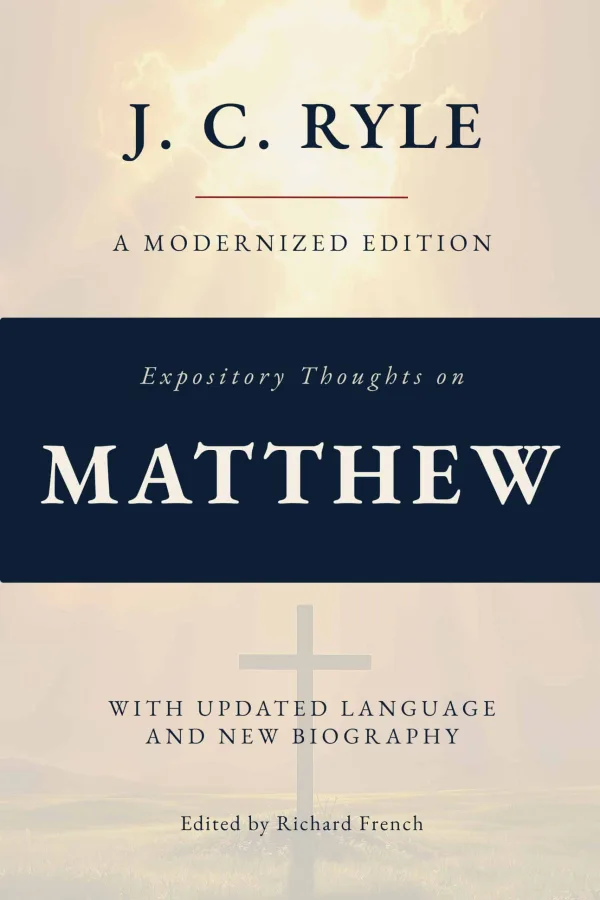
Key Evidence: As J. C. Ryle writes, "The book before us contains not the word of men, but of God" (Expository Thoughts on Matthew, on Matthew 1:1-17).
Context: Matthew 9:9 names the apostle in the third person and tells his calling in a single sentence, with no autobiographical detail added.
This passage functions as the Gospel's own quiet signature. It names its subject rather than its author, trusting the church's later testimony to supply the rest. The sections below walk through that testimony, weigh the internal evidence, and consider what authorship means for how we read Matthew's account of Jesus today.
Key Takeaways
- Anonymous text: The author never names himself. The title "According to Matthew" and church tradition supply the name.
- Early testimony: Papias (in Eusebius, Ecclesiastical History 3.39.16) and Irenaeus (Against Heresies 3.1.1) both connect the Gospel to Matthew.
- Unlikely invention: Matthew was a minor apostle, which gives the church little reason to invent his authorship.
- Modern debate: Many scholars point to the Gospel's reliance on Mark and question apostolic authorship.
- Jewish audience: The Gospel presents Jesus as Son of David and fulfiller of Israel's Scriptures (WEB Matthew 1:1; 5:17).
Who Wrote the Gospel of Matthew According to the Early Church?
Who wrote the Gospel of Matthew is a question the text itself never answers directly. The Gospel is anonymous within its own pages. The title, Kata Maththaion, "According to Matthew," comes from the manuscript tradition, not from the author's own pen.
What the ancient testimony lacks in self-identification, it makes up for in agreement. No early Christian writer proposes a different name.
This agreement carries weight for a particular reason: Matthew held a far lower profile among the Twelve.
Their work is worth consulting for readers who want the fuller historical record behind this tradition.
What Did Papias Mean by "Hebrew"?
Papias's remark about a "Hebrew" Matthew raises a puzzle, because the Gospel we have reads as polished Greek rather than a translation.

- Aramaic sayings: "Oracles" (logia) may describe an early collection of Jesus' sayings in Aramaic.
- Semitic style: "Hebrew" may describe a Jewish manner of argument and arrangement, not a different language.
- Earlier edition: Some scholars propose an Aramaic first draft later recast in Greek. All three views remain live, and none is settled.
The Case for Matthew the Tax Collector
Matthew 9:9 tells the call in one plain, third-person sentence. Only this Gospel's list of the Twelve adds the label "Matthew the tax collector" (WEB Matthew 10:3), while Mark 3:18 and Luke 6:15 give the name alone. That small detail fits an author who remembers where grace found him.
His occupation also points in a useful direction. Those abilities match the Gospel's orderly structure and its capable Greek. This evidence supports the attribution without proving it outright.
One more detail invites reflection. Matthew 13:52 alone preserves Jesus' saying about "every scribe who has been made a disciple in the Kingdom of Heaven," bringing out of his treasure "new and old things" (WEB Matthew 13:52). Many readers see the author's own method reflected here, weaving Israel's Scriptures together with Christ's teaching. This is a reasonable inference readers draw from the text, not a claim the Gospel makes about itself.
For another look at Jesus' teaching in this Gospel, see our passage study on the Sermon on the Mount, where themes of mercy and the law build toward what surfaces again in Matthew 9.
Are Matthew and Levi the Same Man?
Mark 2:14 and Luke 5:27-28 tell the same calling story, but name the man "Levi."
- Matching details: All three accounts share the tax office setting, the command "Follow me," and the immediate response.
- Dual names: Two names for one person were common in first-century Judea, as with Simon and Peter.
- Meaning of the name: Maththaios likely comes from a Semitic name meaning "gift of the LORD."
The Case Against Apostolic Authorship and the Question of Date
The strongest objection concerns Mark. Matthew uses much of Mark's material and wording, and some ask why an eyewitness apostle would lean so heavily on an account written by someone who was not himself an eyewitness. Many conclude the author was an unnamed Jewish Christian scribe writing later in the first century.
Language adds a second layer to the puzzle. If Papias meant a Hebrew or Aramaic original, the polished Greek we actually have raises questions about how that earlier work relates to our Gospel.
Scholars who hold to Matthean authorship offer a response worth considering. Mark's Gospel is traditionally linked to Peter's preaching, so an apostle like Matthew could reasonably draw on an account grounded in Peter's testimony while adding his own material, including the five great discourses found only in his Gospel.
Readers curious about Mark's own authorship question can compare our discussion of who wrote the Gospel of Mark for related evidence.
When Was the Gospel of Matthew Written?
The date depends largely on which authorship view a scholar holds, and on the date assigned to Mark.
- Later-date view: Many scholars who doubt apostolic authorship place the Gospel in the 80s.
- Traditional view: Scholars who accept Matthean authorship generally favor an earlier date, within the lifetime of an eyewitness.
- Common ground: Both positions place the Gospel within the first century.
Audience and Purpose: Why Who Wrote the Gospel of Matthew Matters
Who wrote the Gospel of Matthew shapes how readers weigh this book as testimony from someone who may have seen Jesus' ministry firsthand. The question is more than historical curiosity. It touches how much confidence a reader places in the account itself.
The opening line, "The book of the genealogy of Jesus Christ, the son of David, the son of Abraham" (WEB Matthew 1:1), echoes the phrasing of the Greek Old Testament in Genesis.
Its shape also suits teaching. Five great discourses, in chapters 5-7, 10, 13, 18, and 24-25, each close with a formula such as "when Jesus had finished these words." This arrangement served the early church well for instruction.
One theme ties back to the author's traditional identity. When Jesus answers criticism of his meal with tax collectors and sinners, he says, "I desire mercy, and not sacrifice" (WEB Matthew 9:13, quoting Hosea 6:6). The Gospel of Matthew was written for Jewish Christians, presenting Jesus as Israel's Messiah and the fulfillment of the Law and the Prophets, with a former tax collector standing as living proof of that mercy.
What J. C. Ryle Says About Matthew 1:1-17
Ryle treats the genealogy that opens Matthew's Gospel as a window into Christ's compassion for sinners, not as dry background.
The New Testament begins with the life, death, and resurrection of our Lord Jesus Christ. No part of the Bible is so important as this, and no part is so full and complete. Four distinct Gospels tell us the story of Christ's doing and dying. Four times over we read the precious account of His works and words. How thankful we ought to be for this! To know Christ is life eternal. To believe in Christ is to have peace with God. To follow Christ is to be a true Christian. To be with Christ will be heaven itself. We can never hear too much about Jesus Christ.
J. C. Ryle, Expository Thoughts on Matthew, on Matthew 1:1-17 (modernized edition).
Even in a passage as easy to skim as a genealogy, Ryle keeps the reader's attention fixed on Christ himself. For readers wanting to trace this theme through the whole genealogy and beyond, J. C. Ryle's Expository Thoughts on the Gospels walks through each name and its significance.
Why This Passage Matters
The traditional author of the first Gospel is a man others had written off. His story shows that no past places a person beyond Christ's call. You can read Matthew with confidence while holding the finer questions of sources and date with humility. The Gospel's message of grace and prompt discipleship has a living example in its own traditional author.
Conclusion
So, who wrote the Gospel of Matthew? The early church unanimously named Matthew the tax collector, and the internal evidence, from his occupation to the details found only in chapters 9, 10, and 13, fits that attribution well. Modern scholars continue to debate the question, mainly over Matthew's use of Mark and Papias's puzzling remark about a "Hebrew" original. Both sides deserve a fair hearing.
If you teach this Gospel in a small group or read it on your own, you can present the church's historic view honestly, admit the open questions, and keep your attention where Matthew's own Gospel keeps it: on the Christ who said "Follow me." Perhaps you have felt that your past disqualifies you from his call. The tax collector at his desk suggests otherwise, and you are welcome to bring your honest questions along with you. For a deeper passage-by-passage exploration of the Gospels' teaching and structure, see J. C. Ryle's Expository Thoughts on the Gospels (modernized edition) and the accompanying Gospel study workbooks.