"Judge not" is one of the most quoted sayings of Jesus, and one of the most misused. People often use it to end a conversation the moment anyone raises a moral concern. Yet the same chapter that opens with "Don't judge" goes on to command real discernment about "dogs," "pigs," and false prophets (WEB Matthew 7:1, 6, 15-16).
Maybe you have been told you are "judging" simply for holding a conviction, or you have worried that any moral conviction makes you judgmental. Others use the phrase to silence correction they would rather not hear. It's okay to find this saying hard to apply, and faithful readers have wrestled with it for centuries. The "judge not" saying condemns a hypocritical, fault-finding spirit that scrutinizes a brother's sin while ignoring a far greater sin of its own.
This article looks at the speck and the beam, the charge of hypocrisy, the balancing command of Matthew 7:6, and Jesus' call to "judge righteous judgment" in John 7:24. It is part of our ongoing series, Sermon on the Mount Explained: A Verse-by-Verse Guide, and it closes with pastoral help for living this out.
Quick Answer: "Judge not" in Matthew 7:1-5 is Jesus' command against censorious, hypocritical judging, the habit of condemning a brother's small fault while ignoring one's own greater sin. Jesus still expects his disciples to remove the speck after dealing with the beam. Matthew 7:6 and John 7:24 call believers to humble, righteous discernment.
Definition: The phrase "judge not" in the Gospels refers to Jesus' warning against a hypocritical, condemning spirit that finds fault in others while excusing the same or greater fault in oneself.
Key Scripture: "You hypocrite! First remove the beam out of your own eye, and then you can see clearly to remove the speck out of your brother’s eye." (WEB Matthew 7:5)
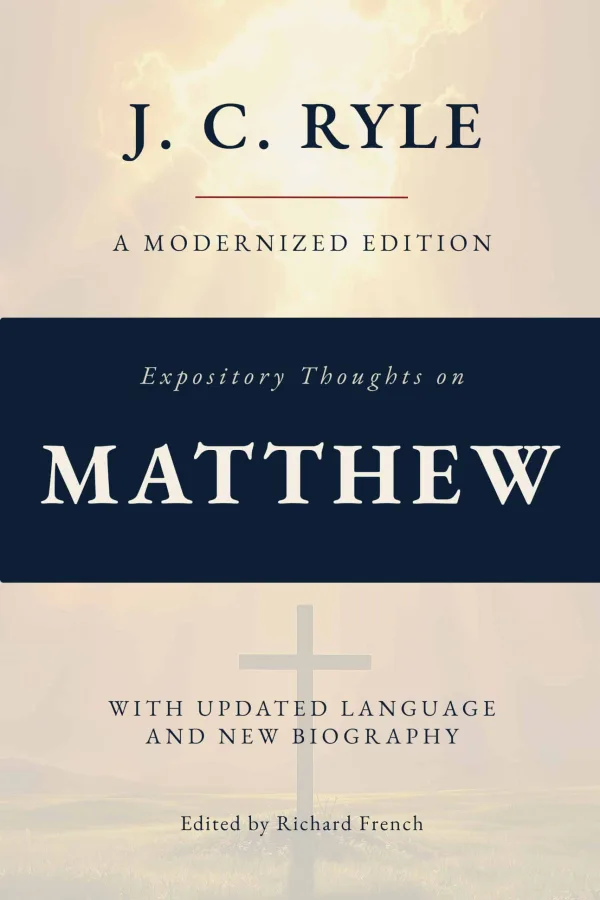
Key Evidence: As J. C. Ryle writes, "Our Lord does not mean that it is wrong, under any circumstances, to pass an unfavorable judgment on the conduct and opinions of others." (Expository Thoughts on Matthew, on Matthew 7:1-11)
Context: The saying continues the Sermon on the Mount's exposure of the "hypocrite," a word used throughout Matthew 6:1-18 and repeated in 7:5.
This saying functions as both warning and instruction. It warns disciples that the standard they use on others will be the standard used on them, with God himself standing behind that measure. It also instructs them in the right order of correction: deal with your own sin first, then help your brother see clearly. The sections below examine the speck and the beam, the passage's place in the Sermon, the balancing commands of Matthew 7:6 and John 7:24, and what this all means for how Christians treat one another today.
Key Takeaways
- Hypocrisy is the target: Jesus condemns a fault-finding spirit that scrutinizes others while excusing itself.
- The measure returns: The standard we use on others will be used on us, with God's judgment standing behind the principle (WEB Matthew 7:2).
- The speck is real: Removing a brother's fault is a good goal once the beam is dealt with.
- Discernment is commanded: Matthew 7:6, 7:15-20, and John 7:24 all require careful evaluation.
- Self-examination comes first: The first application of this passage is always to the reader.
What Does "Judge Not" Mean in Matthew 7:1-5?
"Judge not" begins with a plain command: "Don't judge, so that you won't be judged." (WEB Matthew 7:1) The Greek verb krinō is broad. It can mean simply "to distinguish" or "to decide," but it can also mean "to condemn."
Jesus continues with a sobering principle of reciprocity: "For with whatever judgment you judge, you will be judged; and with whatever measure you measure, it will be measured to you." (WEB Matthew 7:2) The word "judged" points to God, who is the final Judge, though it likely carries human reciprocity as well. Luke's parallel pairs the same saying with "Don't condemn" and "Don’t judge, and you won’t be judged. Don’t condemn, and you won’t be condemned. Set free, and you will be set free." (WEB Luke 6:37), which confirms that condemnation, not mere evaluation, is what Jesus has in view.
In Matthew 7:1, Jesus forbids the habit of passing harsh, hypocritical verdicts on others, the kind of judging that ignores one's own sin. Ryle's commentary on this section of the Sermon is a helpful companion here, and it rewards a slow reading.

The Speck, the Beam, and the Hypocrite
Jesus uses a comic carpentry image to expose the accuser's blindness. The picture would have struck his first hearers, familiar with wood and tools, as both funny and uncomfortable.
- Speck and beam:
- Hypocrite: hypokritēs originally meant an actor, one who plays a part rather than living it.
- The goal: after dealing honestly with his own sin, the disciple will "see clearly" to help his brother (WEB Matthew 7:5).
Understanding the Passage in the Sermon on the Mount
Matthew 7:1-5 continues a concern that runs through the whole Sermon on the Mount. Chapter 6 exposes showy giving, prayer, and fasting, each time naming the "hypocrite," and 7:5 repeats that same word. The passage moves in a clear sequence: a command (verse 1), a reason (verse 2), a vivid image (verses 3-4), and a corrective instruction (verse 5).
The verses around this passage shape how we read it. Verses 1-5 call for humility, verse 6 for prudence, and verses 15-20 for vigilance against false prophets. Verse 12, the Golden Rule, summarizes the Law and the Prophets. None of these neighboring verses describe indifference toward sin or error.
Because the word "brother" places the scene among fellow believers, Matthew 18:15 shows that correction among disciples remains an ongoing duty, not something this passage cancels.
Jesus' "judge not" saying belongs to the Sermon's sustained warning against religious play-acting, which runs from Matthew 6:1 all the way to Matthew 7:5. The text addresses relationships among disciples, and it is worth resisting the temptation to read it as a rule for civil courts or political debate, since that is not the setting Jesus describes.
Old Testament Roots of Righteous Judgment
Jesus' hearers knew a Law that commanded fair judgment and honest rebuke side by side, not one instead of the other.
- Leviticus 19:15-18: commands righteous judging of a neighbor and frank rebuke, while forbidding hatred and vengeance.
- God as Judge: Psalm 75 and Isaiah 33:22 present final judgment as belonging to God alone.
- Hypocrisy exposed: Isaiah 29:13 stands behind Jesus' charge of honoring God with the lips while the heart stays far away.
How Matthew 7:6 and John 7:24 Balance Judge Not
"Judge not" cannot mean a blanket ban on moral evaluation, because the very next verse requires it. "Don't give that which is holy to the dogs, neither throw your pearls before the pigs, lest perhaps they trample them under their feet, and turn and tear you to pieces." (WEB Matthew 7:6) Obeying this command requires assessing people honestly, immediately after the warning in verse 1.
Jesus later commands his disciples to evaluate teachers by their fruit: "Beware of false prophets, who come to you in sheep's clothing, but inwardly are ravening wolves. By their fruits you will know them." (WEB Matthew 7:15-16) In John 7:24, Jesus states the matter directly: "Don't judge according to appearance, but judge righteous judgment." (WEB John 7:24) He uses the same verb, krinō, that Matthew 7:1 restricts, now in a positive command.
Paul's letters carry the same balance. Romans 2:1-3 warns against condemning others for what one practices, and Galatians 6:1 calls believers to restore the fallen gently.
Matthew 7:6 and John 7:24 show that Jesus commands careful, righteous evaluation, and the "judge not" saying governs the spirit in which that evaluation is done, not whether it happens at all.
Why Humble Judgment Matters for Christians Today
God alone is the final Judge. That truth lets believers set down the exhausting burden of pronouncing verdicts on everyone around them. The practical order Jesus gives is simple: begin with confession and self-examination, asking honestly what sits in your own eye, and only then help a brother or sister, gently and with clear sight.
Mercy flows in both directions. "Be merciful, even as your Father is also merciful... Give, and it will be given to you." (WEB Luke 6:36, 38) Christ's own mercy toward sinners is the pattern for this. Disciples who know they have been forgiven correct others as fellow recipients of grace, not as superior judges.
You might find yourself asking: what is the difference between helping a brother see clearly and standing over him as his judge? Matthew 7:1-5 teaches Christians to examine their own hearts first and then to help others with humility and love. This connects back to the Beatitudes, where Jesus calls the poor in spirit and the merciful "Seeing the multitudes, he went up onto the mountain. When he had sat down, his disciples came to him. He opened his mouth and taught them, saying, Blessed are the poor in spirit, for theirs is the Kingdom of Heaven. Blessed are those who mourn, for they shall be comforted. Blessed are the gentle, for they shall inherit the earth. Blessed are those who hunger and thirst for righteousness, for they shall be filled. Blessed are the merciful, for they shall obtain mercy. Blessed are the pure in heart, for they shall see God. Blessed are the peacemakers, for they shall be called children of God. Blessed are those who have been persecuted for righteousness’ sake, for theirs is the Kingdom of Heaven. Blessed are you when people reproach you, persecute you, and say all kinds of evil against you falsely, for my sake. Rejoice, and be exceedingly glad, for great is your reward in heaven. For that is how they persecuted the prophets who were before you." (WEB Matthew 5:1-12), the same posture this passage requires before anyone touches a brother's speck.
Four Misapplications to Avoid
This passage is easily bent in directions Jesus never intended.
- A shield against correction: this ignores Matthew 7:5-6, 7:15-20, and John 7:24.
- A license to condemn: evaluating teaching or conduct differs from pronouncing a person's final standing before God.
- A political rule: the text addresses relationships among disciples, not courts or public policy.
- A warning for others only: ask first, "Where am I the one with the beam?"
What J. C. Ryle Says About Judging and the Censorious Spirit
Ryle's comments on these verses warn against stretching "judge not" beyond its proper meaning, and they name exactly what Jesus forbids: "a censorious and fault-finding spirit."
Our Lord does not mean that it is wrong, under any circumstances, to pass an unfavorable judgment on the conduct and opinions of others. We ought to have decided opinions. ... It was common among the Pharisees. It has always been common from their day down to the present time. We must all watch against it.
J. C. Ryle, Expository Thoughts on Matthew, on Matthew 7:1-11 (modernized edition).
The disciple Jesus describes may still hold clear convictions, but he refuses the habit of magnifying his neighbor's faults. That is the posture Matthew 7:5 demands before removing a brother's speck. For readers wanting to trace this theme across the whole Sermon, J. C. Ryle's Expository Thoughts on the Gospels walks through each passage in turn.
Why This Passage Matters
"Judge not" guards the church against two opposite failures: harshness toward others and silence about sin. In a culture that treats every moral conviction as judgmental, believers need the clear sight that comes from honest self-examination. Grace received from the true Judge produces disciples who restore others gently while continuing to grow in holiness themselves.
Conclusion
"Judge not" is Jesus' warning against hypocritical, condemning judgment, not a ban on moral conviction or loving correction. It sits alongside his command to discern character, to inspect fruit, and to "judge righteous judgment" (WEB John 7:24). If you feel the weight of getting this balance right, take heart: you do not have to be the judge of everyone. Begin with your own eye, confess the beam, and receive Christ's mercy. Then, when the time comes, serve your brother or sister with gentle, clear-sighted love.
For more on this section of Jesus' teaching, return to Sermon on the Mount Explained: A Verse-by-Verse Guide, and watch for our next passage on Matthew 7:7-12. For a deeper verse-by-verse exploration, see J. C. Ryle's Expository Thoughts on the Gospels (modernized edition) and the Gospel study workbooks for your own study or for leading a group.