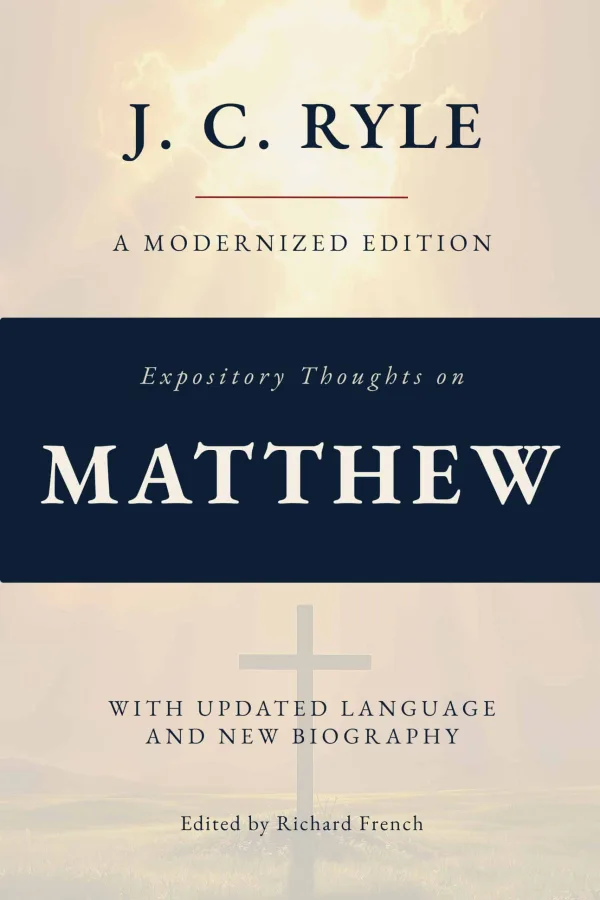
Few verses have stirred more debate than Jesus' words to Peter at Caesarea Philippi. The Matthew 16:18 meaning shapes how Christians understand Christ, the church, and Peter's place within it, and the debate goes back centuries. J. C. Ryle begins his own comments on this passage by admitting plainly, "There are words in this passage which have led to painful differences and divisions among Christians" (J. C. Ryle, Expository Thoughts on Matthew, on Matthew 16:13-20).
The verse sits at a turning point in Matthew's Gospel, just before Jesus first tells His disciples that He must suffer and die (KJV Matthew 16:21). Faithful readers have debated "this rock" for two thousand years, so wrestling with this passage belongs to a long tradition, and it's fine to approach the text with both reverence and real questions.
The Matthew 16:18 meaning centers on Christ's promise to build His church and to keep it safe from death. This article walks through Matthew 16:13-20 verse by verse. We'll look at the three main readings of "this rock," including the Roman Catholic view, examine the keys and the language of binding and loosing, and close with Ryle's application for believers today.
Quick Answer: The Matthew 16:18 meaning is a promise from Jesus that He Himself will build His church and that death and the powers of darkness will never overcome it. Christians read "this rock" in three main ways: Peter himself, Peter's confession of Christ, or Christ Himself. All three readings agree that Christ is the builder and owner of the church.
Definition: The Matthew 16:18 meaning in the Gospels refers to Jesus' declaration at Caesarea Philippi that He will build His church on a foundation that death itself cannot overcome.
Key Scripture: "And I say also unto thee, That thou art Peter, and upon this rock I will build my church; and the gates of hell shall not prevail against it." (KJV Matthew 16:18)
Key Evidence: As J. C. Ryle writes, "The mystical body of Christ shall never perish or decay" (Expository Thoughts on Matthew, on Matthew 16:13-20).
Context: Jesus speaks these words in answer to Peter's confession, "Thou art the Christ, the Son of the living God" (KJV Matthew 16:16).
Key Takeaways
- Jesus promises that He Himself will build His church, and death will never overcome it.
- Christians read "this rock" as Peter, Peter's confession, or Christ Himself, and all three keep Christ as the builder.
- The keys and the language of binding and loosing picture authority entrusted by Christ, who alone holds the kingdom.
- Peter's quick stumble in Matthew 16:23 shows that the church's security rests on Christ's power, not on any believer's strength.
This passage functions as the hinge of Matthew's Gospel. Peter's confession settles who Jesus is, and Jesus' response reveals what He came to build and how secure that building will be. The promise matters because it ties the church's future to Christ's own power, a power about to be displayed through His death and resurrection. The sections below take the passage phrase by phrase, set out where Christians differ on "this rock," and show what Ryle drew from this text for his own readers.
Who Do Men Say That I the Son of Man Am? (Matthew 16:13-17)
Jesus asks His question in "the coasts of Caesarea Philippi" (KJV Matthew 16:13), a region near Mount Hermon known for a shrine to the Greek god Pan. Some scholars suggest the nearby cave was popularly linked to an entrance to the underworld, though this connection remains a scholarly inference rather than a settled fact. Either way, Jesus raises the question of His identity in a setting thick with rival claims to divine power.
The crowd's answers, "John the Baptist," "Elias," and "Jeremias" (KJV Matthew 16:14), honor Jesus while still placing Him among the prophets. Then Jesus turns the question personal: "But whom say ye that I am?" (KJV Matthew 16:15). Peter answers, "Thou art the Christ, the Son of the living God" (KJV Matthew 16:16). "Christ" translates the Greek Christos, itself rendering the Hebrew Mashiach, the Anointed King. The second title confesses something more: Jesus' divine sonship.
Ryle quotes an older writer, Brentius, who called this confession "an epitome of all Christianity, and a compendium of true doctrine about religion" (J. C. Ryle, Expository Thoughts on Matthew, on Matthew 16:13-20). Jesus answers, "Blessed art thou, Simon Bar-jona: for flesh and blood hath not revealed it unto thee, but my Father which is in heaven" (KJV Matthew 16:17). The Greek verb behind "revealed" means "uncovered," so Peter's insight comes to him as a gift, not an achievement.
Peter's confession in Matthew 16:16 identifies Jesus as the promised Messiah and the Son of the living God, a truth Jesus says the Father Himself revealed.
Matthew 16:18 Meaning: The Rock, the Church, and the Gates of Hell
Jesus answers Peter's confession with a wordplay: "thou art Peter, and upon this rock I will build my church" (KJV Matthew 16:18). Jesus likely spoke Aramaic, where the word Kepha served for both the man's name and the rock, a link already made earlier when Jesus renamed Simon: "thou shalt be called Cephas, which is by interpretation, A stone" (KJV John 1:42).
"My church" translates ekklēsia, meaning "assembly, those called together," a word used in the Greek Old Testament for Israel gathered before the Lord. Ryle defines the church this way: "the whole body of believers of every age, and tongue, and people" (J. C. Ryle, Expository Thoughts on Matthew, on Matthew 16:13-20).
The KJV's "hell" renders the Greek hadēs, the realm of the dead, the strongest power any human community faces. Ryle reads the promise plainly: "The meaning of this promise is, that the power of Satan shall never destroy the people of Christ" (J. C. Ryle, Expository Thoughts on Matthew, on Matthew 16:13-20). Readers wanting more on how "Hades" functions elsewhere in Scripture may find it helpful to compare what Hades refers to in Revelation.
Jesus' words work as both promise and foundation. They answer Peter's confession by showing where a true confession leads: to a church that Christ Himself builds. Because the builder is Christ, the church's security rests on His power and not on the strength of its members. Christians have identified "this rock" in three main ways, and all three keep Christ at the center.
Peter Himself
Many readers take the wordplay at face value and see Peter as the rock. The Roman Catholic Church holds this view and sees in it the foundation of Peter's primacy and of the papacy, as defined by the First Vatican Council (1870) and restated in the Catechism of the Catholic Church (paragraph 881). Many Protestant scholars, such as D. A. Carson (EBC) and R. T. France (NICNT), also take the rock to be Peter as the confessing apostle, while rejecting any line of successors.
Peter's Confession
Others take the rock to be the truth Peter had just confessed, "Thou art the Christ, the Son of the living God" (KJV Matthew 16:16). This was Ryle's own reading: he took the rock to be the truth of Christ's Messiahship and divinity, and he noted that Chrysostom held the same view long before.
Christ Himself
A third reading takes the rock to be Christ Himself. Augustine favored it in his later writings, though he left readers free to choose between it and the reading of Peter as the rock, and Luther often argued for it.
- Supporting texts: "For other foundation can no man lay than that is laid, which is Jesus Christ" (KJV 1 Corinthians 3:11); Ephesians 2:20 names "Jesus Christ himself" as "the chief corner stone" (KJV Ephesians 2:20).
The Keys, Binding and Loosing, and the Charge to Silence (Matthew 16:19-20)
Jesus continues, "I will give unto thee the keys of the kingdom of heaven" (KJV Matthew 16:19). Keys picture delegated authority to open and shut, recalling Isaiah's words about the steward of David's house: "the key of the house of David will I lay upon his shoulder" (KJV Isaiah 22:22). Similar words appear later addressed to the disciples more broadly in Matthew 18:18.
Christians differ on the keys too. Roman Catholic teaching sees in them an authority given to Peter and handed on to his successors. Ryle read them as Peter's privilege of first opening the door of faith, to Jews at Pentecost and to the Gentile Cornelius, and he took binding and loosing as the apostles' commission to declare the way of salvation and settle disputed questions, as at the Jerusalem council (Acts 15), a commission he believed ended with the apostles.
Then "charged he his disciples that they should tell no man that he was Jesus the Christ" (KJV Matthew 16:20), likely to guard against political or nationalistic hopes attaching themselves to His mission. The keys in Matthew 16:19 picture authority entrusted by Christ, who alone holds the kingdom itself.
The Matthew 16:18 Meaning for Christians Today
Maybe you've wondered whether your faith is strong enough to hold under pressure. Only a few verses after being praised, Peter hears something very different: "Get thee behind me, Satan: thou art an offence unto me" (KJV Matthew 16:23). The man named Peter, "a stone," in verse 18 stumbles within moments, which tells readers something important: the church's security was never meant to rest on Peter's own strength.
Jesus says, "I will build." The future of His people rests on His power, not on the size, skill, or cultural standing of any congregation. Readers working through the Sermon on the Mount will recognize the same pattern: Jesus calls His followers to a kingdom built on His word, not their own performance.
Every reader faces the same question Jesus asked the Twelve. Ryle urges believers to copy Peter's zeal, admitting plainly that "Zeal like his may have its ebbs and flows, and sometimes lack steadiness of purpose" (J. C. Ryle, Expository Thoughts on Matthew, on Matthew 16:13-20). He also warns that Christians have argued over this passage until they lost sight of love, a caution worth holding onto. You can hold your own convictions about "this rock" firmly and still treat fellow believers with kindness.
Jesus goes on to speak of His own death and resurrection (KJV Matthew 16:21). Christ passes through the gates of death Himself, and so they cannot hold His people either. Matthew 16:18 assures believers that Christ Himself builds and keeps His church.
What J. C. Ryle Says About Matthew 16:13-20
Ryle lingers over the courage behind Peter's confession, noticing the circumstances under which it was made.
The glory of Peter's confession lies in this, that he made it when few were with Christ and many against Him. He made it when the rulers of his own nation, the Scribes, and Priests, and Pharisees, were all opposed to his Master. He made it when our Lord was in the "form of a servant," without wealth, without royal dignity, without any visible marks of a King. To make such a confession at such a time, required great faith and great decision of character.
J. C. Ryle, Expository Thoughts on Matthew, on Matthew 16:13-20 (modernized edition).
Ryle draws out that Peter spoke this truth with the nation's leaders against Jesus and with nothing outwardly royal to point to. He also defends Peter against readers quick to underrate him for his later denial, describing him as a true-hearted, fervent servant of Christ. For readers wanting to trace this theme further through Matthew, J. C. Ryle's Expository Thoughts on Matthew returns to Peter at each later stage of the narrative.
Why This Passage Matters
Matthew 16:13-20 brings readers to the central question of faith: who is Jesus? Small, persecuted, or discouraged congregations can rest on Christ's own promise that the gates of hell shall not prevail against His people. Peter received this truth by grace and still needed correction soon after, a reminder that every believer confesses Christ by the Father's gift and grows through ongoing discipleship.
Conclusion
The Matthew 16:18 meaning centers on Christ, who builds His church on a rock and guards it against death itself. Christians identify that rock as Peter, his confession, or Christ Himself, and all three readings agree on one thing: Jesus is the builder. Whichever view you hold, let Peter's confession become your own: "Thou art the Christ, the Son of the living God." Take courage from Christ's promise, and let it steady you the next time fear or opposition presses in. For a fuller passage-by-passage study, see J. C. Ryle's Expository Thoughts on the Gospel of Matthew (Annotated) and The Gospel of Matthew: A 28-Week Study Workbook, week 16.