If you've heard "where two or three are gathered together in my name, there am I in the midst of them" (KJV Matthew 18:20) quoted at a small prayer meeting, you've likely wondered what it actually promises. The Matthew 18:18 meaning sits right alongside that verse, in the same breath of teaching, and it answers a related question: what authority did Jesus give his disciples to handle sin among themselves? The verse comes directly after Jesus' steps for a brother who "shall trespass against thee" (KJV Matthew 18:15).
Taken on its own, verse 18 can sound like a sweeping grant of power. The Matthew 18:18 meaning is not a blank check for commanding heaven. It specifically describes the authority Christ gives his disciples to act, under his teaching, in a concrete case of unrepented sin. Christians have read "bind" and "loose" in several ways, and it's okay if this passage feels hard to pin down, because faithful readers have wrestled with it for centuries. We'll look at the main readings fairly, with their sources, before hearing what J. C. Ryle draws from the passage.
This article works through Matthew 18:15-20 passage by passage, then sets out the leading interpretive traditions so you can weigh them for yourself.
Quick Answer: Matthew 18:18 is Jesus' promise that what his disciples bind and loose on earth is bound and loosed in heaven. He speaks it while explaining how to correct a brother who sins. Christians read it as church discipline, apostolic authority, or priestly absolution. Its setting links it to the "two or three" gathered in Christ's name in verse 20.
Definition: Matthew 18:18 in the Gospels refers to authority Jesus gives his disciples to "bind" and "loose," which Christians variously read as church discipline, apostolic authority, or priestly absolution.
Key Scripture: "Whatsoever ye shall bind on earth shall be bound in heaven: and whatsoever ye shall loose on earth shall be loosed in heaven." (KJV Matthew 18:18)
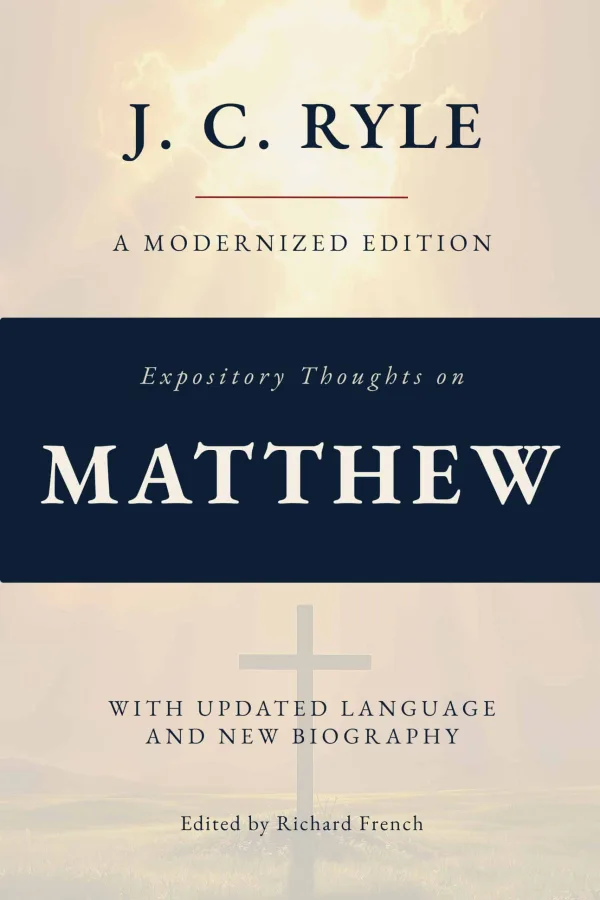
Key Evidence: As J. C. Ryle writes, "Spiritual penalties are the only penalty He permits the Church to inflict, and when rightly inflicted, they are not to be lightly regarded." (on Matthew 18:15-20)
Context: The saying opens with "Verily I say unto you" and continues the instructions of verses 15 to 17 on restoring an erring brother.
This passage closes Jesus' instruction on restoring a sinning brother, and it functions as both authorization and comfort. It authorizes the gathered disciples to act with real weight when they address unrepented sin, grounding their decision in Christ's own teaching rather than human opinion. It comforts them by promising that Jesus himself stands present in that gathering, whatever its size. The sections below walk through verses 15 to 20 one at a time and close with Ryle's reflection on the whole passage.
Key Takeaways
- Restoration goal: Jesus' process aims to win back the brother, "thou hast gained thy brother" (KJV Matthew 18:15).
- Two or three witnesses: The steps rest on the Law's rule in Deuteronomy 19:15 that a matter is settled by more than one witness.
- Binding and loosing: Readings include church discipline, apostolic authority, and priestly absolution, each with its own sources.
- Agreement in prayer: Verse 19 promises the Father's answer when two "agree on earth."
- Christ's presence: Ryle calls verse 20 "a striking proof of our Lord's divinity."
The Setting of Matthew 18:15-17: When a Brother Trespasses
The passage begins with a private step. Jesus says, "Go and tell him his fault between thee and him alone," and states the goal plainly: "if he shall hear thee, thou hast gained thy brother" (KJV Matthew 18:15). Restoration, not correction for its own sake, drives every step that follows.
If the private visit fails, the next move brings in others: "take with thee one or two more, that in the mouth of two or three witnesses every word may be established" (KJV Matthew 18:16). This draws directly on the Law: "at the mouth of two witnesses, or at the mouth of three witnesses, shall the matter be established" (KJV Deuteronomy 19:15). The witnesses protect the accused as well as the one bringing the complaint.
Only then does the matter go further: "tell it unto the church." If the person still refuses, "let him be unto thee as an heathen man and a publican" (KJV Matthew 18:17). The phrase about a heathen man and a publican need not mean contempt; in this same Gospel, Jesus calls a publican named Matthew to follow him (KJV Matthew 9:9). Many read it as a changed standing, someone now outside the fellowship yet still someone to be called back. The whole sequence sits between the parable of the lost sheep (18:12-14) and Peter's question about forgiving "how oft" a brother sins (KJV Matthew 18:21), so mercy frames the process on both sides.

Matthew 18:18 Meaning: What Binding and Loosing Signify
The Matthew 18:18 meaning begins with its own wording: "Whatsoever ye shall bind on earth shall be bound in heaven: and whatsoever ye shall loose on earth shall be loosed in heaven" (KJV Matthew 18:18). The opening "Verily I say unto you" ties this straight to the case just described in verses 15 to 17.
Jesus' first hearers would have recognized "bind" and "loose" as the language of Jewish teaching authority. Rabbis used these terms for rulings that declared something forbidden or permitted.
The Greek grammar adds a layer worth noticing. Behind "shall be bound" stands a verb form some scholars read as "will have been bound," meaning the earthly decision reflects a verdict already settled in heaven rather than heaven simply ratifying whatever the church decides. Other scholars give this grammatical point less weight. Both views are worth holding loosely.
It's worth comparing this to Matthew 16:19, where Jesus tells Peter alone, "whatsoever thou shalt bind on earth shall be bound in heaven" (KJV Matthew 16:19). In chapter 18 the "ye" is plural, spoken to the gathered disciples. How these two sayings relate is one of the main points where Christian traditions part ways, as we'll see below. Matthew 18:18 uses Jewish teaching terms to describe authority Jesus gives his disciples specifically in cases of sin.
If you want to see how this discourse connects to Jesus' wider teaching on righteousness and community life, the Sermon on the Mount explained verse by verse offers a helpful companion study.
Matthew 18:19-20: Agreement in Prayer and Two or Three Gathered
Verse 19 continues the thought: "Again I say unto you, That if two of you shall agree on earth as touching any thing that they shall ask, it shall be done for them of my Father which is in heaven" (KJV Matthew 18:19).
Some read the word "Again" as linking verse 19 back to the case of the erring brother; others read it as a wider promise for united prayer generally. Faithful interpreters hold both readings.
Verse 20 then gives the ground for what precedes it: "For where two or three are gathered together in my name, there am I in the midst of them" (KJV Matthew 18:20). The "two or three" echoes the witnesses named in verse 16. Matthew's Gospel opens by naming Jesus "Emmanuel, which being interpreted is, God with us" (KJV Matthew 1:23) and closes with "lo, I am with you alway, even unto the end of the world" (KJV Matthew 28:20). Verse 20 belongs to that same promise, stretched across the whole book.
Ryle writes plainly about what this claim means: "a striking proof of our Lord's divinity." Matthew 18:20 promises that Jesus is in the midst of those gathered in his name, which Ryle reads as evidence of his divinity.
Matthew 18:18 Meaning Across Christian Traditions
Christians agree that verse 18 describes real authority given by Jesus. They differ over its scope, over who holds it, and over how far verses 19 and 20 extend. Here are the main readings, presented in their own terms.
The church discipline reading takes binding and loosing as a congregation's authority to declare an unrepentant member held in sin, and a repentant member released, in line with Christ's own teaching. Ryle holds this view, understanding the passage to give a congregation power to exclude disobedient members from its ordinances. He also warns against stretching "hear the church" into a claim of authority for the whole visible church over doctrine. Readers of Matthew 18:18 differ mainly on who exercises binding and loosing and on how widely the authority extends.
Apostolic Authority Reading
This reading links Matthew 18:18 to the apostles' founding commission rather than every local congregation.
- Key texts: Matthew 16:19 and "Whose soever sins ye remit, they are remitted unto them; and whose soever sins ye retain, they are retained" (KJV John 20:23)
- Claim: The disciples addressed carry a founding authority to declare forgiveness and rule on teaching, a reading common among Protestant interpreters, who often see that founding role as ending with the apostles
Roman Catholic Reading
- Scope: Covers absolving sins, making doctrinal judgments, and disciplinary decisions, coming through the apostles and in a special way through Peter, continued in the bishops
- Sacrament: The Catechism of the Catholic Church (paragraphs 553 and 1444-1445) connects binding and loosing to the sacrament of penance
Popular Prayer Use of 18:19-20
Many believers use verses 19 and 20 as general promises for united prayer and small gatherings of any kind.
- Support: Ryle himself applies the promise of verse 20 to gatherings for prayer, praise, and Bible reading
- Caution: Some commentators tie verse 19 closely to the discipline case and question using it as an open guarantee for any request
For readers wanting to trace how church authority and forgiveness develop elsewhere in the Gospels, The Prodigal Son explained shows the same themes of restoration from a different angle.
What J. C. Ryle Says About Matthew 18:15-20
Ryle reads this passage as a clear basis for discipline within a local congregation, and he is careful to state what that discipline does and does not involve.
Ryle draws out that Jesus intends each congregation, acting as a body or through its elders, to take account of its members' conduct. He insists the penalties are spiritual, not civil, and he warns that churches have erred in both directions, sometimes too lax and sometimes too harsh, so discipline must be exercised with care and wisdom.
Why This Passage Matters
Matthew 18:15-20 calls believers to deal with sin face to face, patiently, and with the aim of restoration rather than exposure. It assures small and struggling congregations that Christ is "in the midst of them" (KJV Matthew 18:20), no matter how modest the gathering looks. And it places the church's authority under the same grace shown in the parables on either side of it, which makes forgiveness the mark of Christ's people.
Conclusion: The Matthew 18:18 Meaning for Today
Matthew 18:18-20 closes Jesus' steps for restoring a brother who sins. It promises heaven's backing for binding and loosing, the Father's answer to agreed prayer, and Christ's own presence with two or three gathered in his name. Christians read the Matthew 18:18 meaning in several ways, as church discipline, apostolic authority, or priestly absolution, and each reading takes Jesus' words as conferring real, Christ-given authority.
Maybe you carry a strained friendship in your church, or a small group that feels too modest to matter. Whatever your tradition, the pastoral call is the same: go first "between thee and him alone" (KJV Matthew 18:15), pray together in agreement, and trust that Christ truly attends his gathered people. There's no shame in taking the first step slowly. For a fuller passage-by-passage study, see J. C. Ryle's Expository Thoughts on the Gospel of Matthew (Annotated) and The Gospel of Matthew: A 28-Week Study Workbook, week 18.