Soon after Peter confesses Jesus as the Christ, something shifts. Jesus begins "to shew unto his disciples, how that he must go unto Jerusalem, and suffer many things" (KJV Matthew 16:21). Peter answers, "Be it far from thee, Lord" (KJV Matthew 16:22). What follows is a call that makes Jesus' road the road of every follower, and understanding the Matthew 16:24 meaning starts right here, in the collision between Peter's expectations and Jesus' announcement.
If the idea of a "suffering Messiah" feels strange to you, it's worth pausing here. It felt strange to Peter too.
The Matthew 16:24 meaning is not a vague call to endure hardship. It specifically describes the shape of life under a crucified and risen Messiah: giving up self-rule, accepting the cost of loyalty to Christ, and walking behind him in daily obedience. This post works through Matthew 16:24-28 verse by verse, covering self-denial, the paradox of losing and finding life, the worth of the soul, the reward at Christ's coming, and the four main readings scholars give to the puzzling verse 28.
Quick Answer: The Matthew 16:24 meaning is a call to every disciple to follow the crucified Messiah on his own road. To "deny himself" is to give up self-rule. To "take up his cross" is to accept the shame and loss that loyalty to Christ brings. To "follow me" is to keep walking behind Jesus in steady obedience.
Definition: The Matthew 16:24 meaning in the Gospels represents Jesus' call for every disciple to disown self-rule, accept the cost of following him, and continue obediently behind him.
Key Scripture: "If any man will come after me, let him deny himself, and take up his cross, and follow me." (KJV Matthew 16:24)
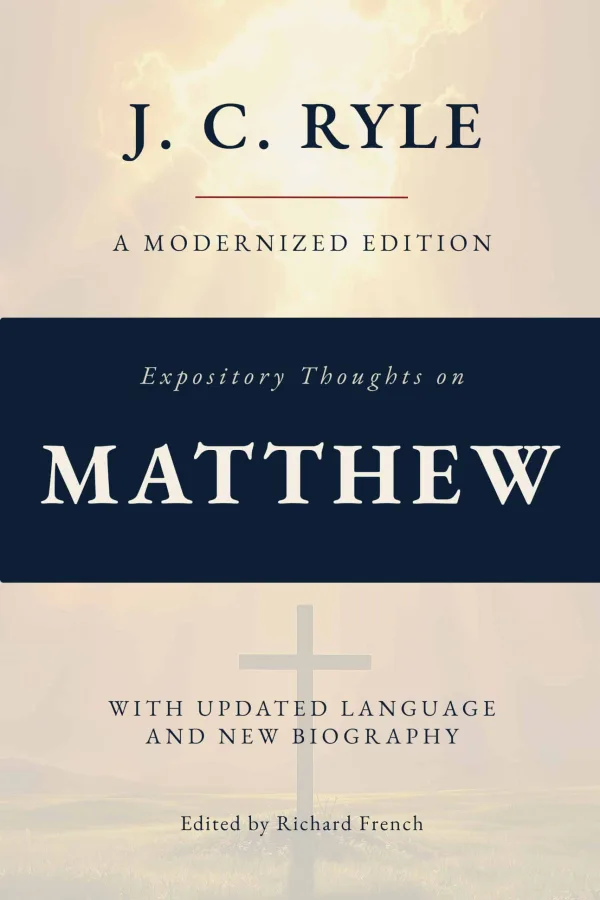
Key Evidence: As J. C. Ryle writes, "The bitter must come before the sweet, the cross before the crown" (J. C. Ryle, on Matthew 16:24-28).
Context: Jesus speaks these words right after announcing his own death and resurrection (KJV Matthew 16:21), so the disciple's cross follows from the Master's cross.
This passage works as both announcement and invitation. It announces that the road to glory runs through suffering, first for Jesus and then for anyone who follows him. It invites every disciple to a decisive, ongoing response rather than passive admiration. The sections below walk through each verse, note where faithful Christians read the details differently, and close with what Ryle draws from this passage for self-examination.
Key Takeaways
- Self-denial concerns rule: To "deny himself" means handing the controls of life to Christ, not self-hatred.
- The cross is loyalty's cost: The losses in view are those suffered "for my sake" (KJV Matthew 16:25).
- The soul outweighs the world: Ryle calls verse 26 "one of the most solemn questions that the New Testament contains."
- Verse 28 has four main readings: Transfiguration, resurrection and Pentecost, AD 70, and the second coming.
Matthew 16:24 Meaning Verse by Verse: Deny, Take Up, Follow
The Matthew 16:24 meaning grows directly out of the scene before it. Jesus has just told Peter, "Get thee behind me, Satan" (KJV Matthew 16:23), and now he says, "If any man will come after me" (KJV Matthew 16:24). Peter is put back in the follower's place, and so is every reader.
The word "will" in "if any man will come after me" carries the sense of "wills" or "desires." It describes a settled choice, not a passing feeling. Three commands follow: "deny himself," "take up his cross," and "follow me." The grammar pictures a decisive break with self-rule that opens into a lifelong walk behind Jesus.
Maybe you've wondered what taking up a cross could look like on an ordinary Tuesday. Faithful readers have wrestled with that question for centuries, and there's no shame in asking it honestly. Christians differ mainly in emphasis. Some stress readiness for martyrdom, since the cross was a Roman instrument of death. Others stress daily self-denial, drawing on Luke's "daily" (KJV Luke 9:23).

What "His Cross" Meant to the First Hearers
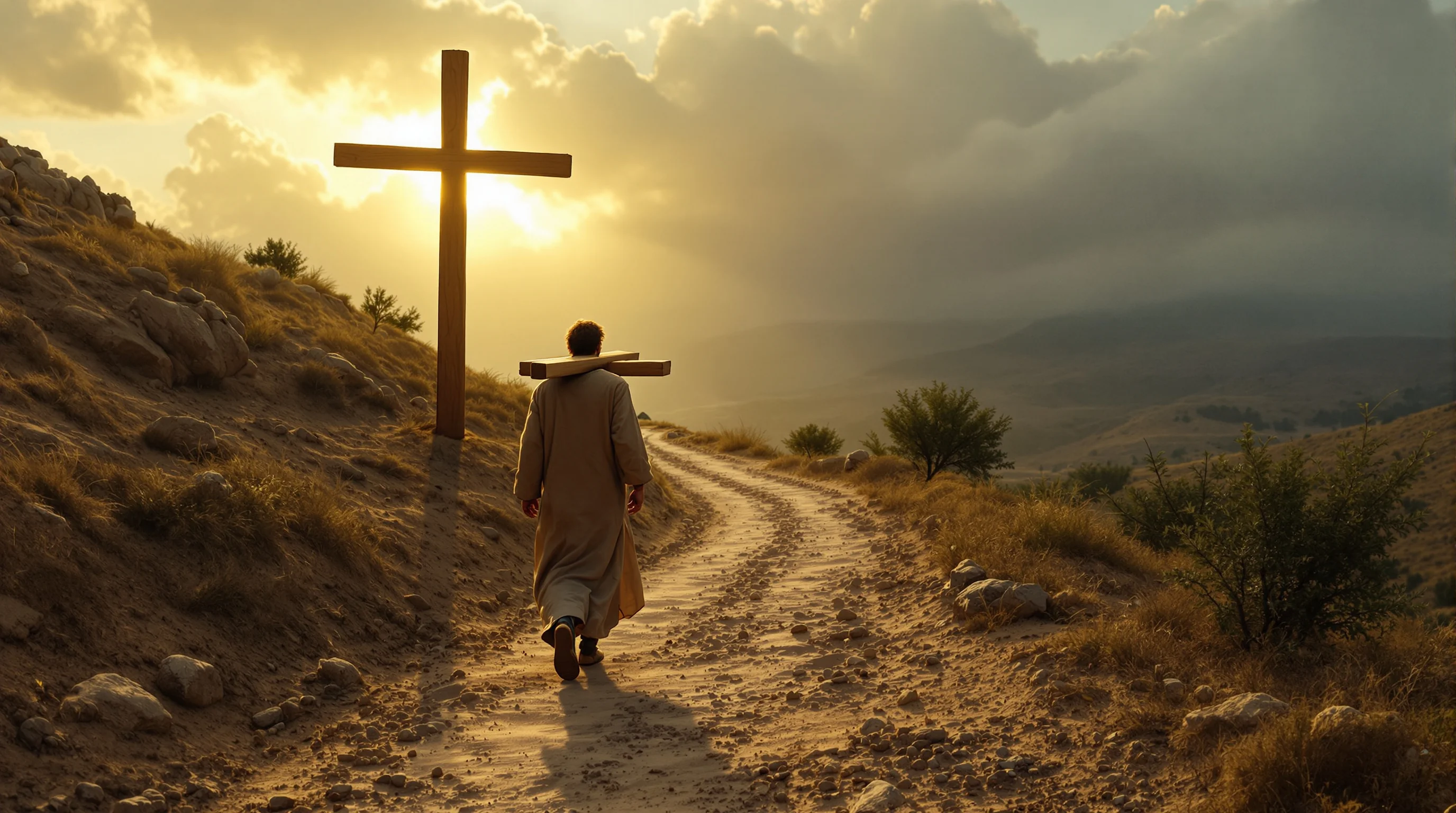
- The image: A man carrying his cross was already condemned and walking toward death, with no road back.
- The point: At minimum, Jesus' first hearers understood a call to total, costly commitment.
Losing Life to Find It: Matthew 16:25-26
Verse 25 gives the reason behind verse 24, opening with the word "For": "whosoever will save his life shall lose it: and whosoever will lose his life for my sake shall find it" (KJV Matthew 16:25). The phrase "for my sake" sets a boundary around the whole teaching. The loss in view comes from loyalty to Jesus specifically, not from suffering sought for its own sake.
Verse 26 uses the language of the marketplace to press the point further: "For what is a man profited, if he shall gain the whole world, and lose his own soul? or what shall a man give in exchange for his soul?" (KJV Matthew 16:26). Nothing in the world can buy back a forfeited soul. As Ryle puts it, "The soul is eternal. That one single word is the key to the whole question."
In Matthew 16:25-26, Jesus teaches that clinging to life at any cost forfeits it, and surrendering life for his sake receives it. To trace how this theme of losing life to find it runs through the wider Gospel narrative, consider Jesus' own surrender in Gethsemane, which shows the same pattern at its deepest point.
"Life" and "Soul" in One Greek Word
The King James Version translates one Greek word, psychē, as "life" in verse 25 and "soul" in verse 26.
- Range of meaning: Psychē covers physical life and the whole self together.
The Son of Man's Coming and Reward: Matthew 16:27
A third "For" introduces verse 27: "For the Son of man shall come in the glory of his Father with his angels; and then he shall reward every man according to his works" (KJV Matthew 16:27). This picture of glory echoes Daniel 7:13-14, where one "like the Son of man" receives dominion and an everlasting kingdom.
Ryle reads the verse as a promise held out to discouraged disciples, placing the full reward at Christ's return, when the cross gives way to the kingdom. Matthew 16:27 places the disciple's reward at the coming of the Son of Man in his Father's glory, not in the present age.
Rewarded "According to His Works"
Christians have related this phrase to salvation by grace in more than one way.
- Degrees of reward: Some see this as describing varied rewards among believers already saved by grace.
- Evidence of faith: Others read the works as the fruit of saving faith rather than its ground; Paul grounds this cross-shaped life in faith in the Son of God, "who loved me, and gave himself for me" (KJV Galatians 2:20).
"Some Standing Here": Four Readings of Matthew 16:28
Verse 28 raises one of the harder questions in Matthew: "There be some standing here, which shall not taste of death, till they see the Son of man coming in his kingdom" (KJV Matthew 16:28). Faithful readers have taken this in several directions, and it's okay to find it challenging. Knowing the main options helps more than assuming only one.
The Transfiguration reading notes that Matthew moves straight on: "after six days" Peter, James and John see Jesus transfigured (KJV Matthew 17:1-2). Chrysostom and many early writers took verse 28 this way, and Peter later recalls being with Christ "in the holy mount" (KJV 2 Peter 1:18).
The resurrection and Pentecost reading sees the kingdom coming in power when Christ rose, ascended and poured out the Spirit, events most of the disciples lived to see. Calvin read the verse this way.
The AD 70 reading links the verse to the judgment on Jerusalem and its temple, which some of the disciples lived to see, as a visible sign of the Son of Man's reign. Preterist interpreters such as J. Stuart Russell held this view.
The second coming reading ties verse 28 to the final coming of verse 27. Readers who take it this way differ on how "some standing here" fits; critics such as Albert Schweitzer concluded that Jesus expected the end within that generation.
Christians read Matthew 16:28 in four main ways: the Transfiguration, the resurrection and Pentecost, the events of AD 70, and the second coming. Weighing each option against its supporting texts for yourself is a worthwhile exercise, and none of these readings changes the call of verse 24.
What J. C. Ryle Says About Matthew 16:24-28
Ryle notices that the disciples expected an earthly kingdom, and he shows how Jesus corrects that expectation with plain honesty about the cost ahead.
It is good for us all to see this point clearly. We must not conceal from ourselves that true Christianity brings with it a daily cross in this life, while it offers us a crown of glory in the life to come. The flesh must be daily crucified. The devil must be daily resisted. The world must be daily overcome. There is a warfare to be waged, and a battle to be fought. All this is the inseparable accompaniment of true religion.
J. C. Ryle, Expository Thoughts on Matthew, on Matthew 16:24-28.
Ryle closes his comments with questions rather than conclusions. He asks whether the reader has taken up the cross and carries it daily, whether the reader lives as though the soul has eternal value, and whether the reader looks for Christ's second coming with hope. Those questions invite you to measure your own life against the text, gently and honestly, the way a pastor sits beside someone and asks how they are really doing.
Why This Passage Matters
Matthew 16:24-28 shows that following Jesus means walking the road he walked first, a road that ends in glory rather than loss. Believers facing pressure, quiet daily sacrifice, or outright opposition hear Jesus naming the cost in advance and promising that life lost for his sake is found. The Christ who calls disciples to the cross is the same Christ who was crucified and raised for them, which is why this call is good news and not merely a demand.
Conclusion
The Matthew 16:24 meaning, stated plainly, is this: Jesus calls every disciple to deny self-rule, bear the cost of loyalty to him, and follow him with steady obedience. He gives three reasons. True life is found by losing it, the soul outweighs anything the world can offer, and the Son of Man will come to reward his people. If the call feels heavy today, remember that Jesus names the cost honestly and walks the road ahead of you. You don't carry your cross alone or in your own strength. For a fuller passage-by-passage study, see J. C. Ryle's Expository Thoughts on the Gospel of Matthew (Annotated) and The Gospel of Matthew: A 28-Week Study Workbook, week 16.