"Don't judge" may be the most quoted Bible verse among people who rarely open a Bible. Yet four verses later, Jesus commands his hearers to remove the speck from a brother's eye (WEB Matthew 7:5). That tension points to a wider problem with sermon on the mount verses: they get lifted out and made to say things Jesus' first hearers would not have recognized.
Matthew 5 to 7 is among the most quoted and most misquoted sections of the Gospels. Popular sayings pulled from the discourse often drift far from their original setting. The sermon on the mount is not a loose collection of proverbs you can pick and choose from. It specifically describes the inward righteousness that marks citizens of God's Kingdom, a righteousness Jesus says must exceed that of "the scribes and Pharisees" (WEB Matthew 5:20).
This article looks at six commonly misread verses, reads each within its paragraph and Old Testament setting, and shows how to apply them without distortion.
Quick Answer: The sermon on the mount verses Christians most often misread are Matthew 7:1, 5:17, 5:39, 5:48, 7:7, and 6:33. Each makes sense only within its paragraph. Jesus forbids hypocritical judgment, completes the Law, forbids personal retaliation, calls disciples to the Father's generous love, encourages persistent prayer, and frees disciples from anxiety about daily needs.
Definition: The Sermon on the Mount in the Gospels represents Jesus' basic teaching on Kingdom righteousness, a discourse describing the character of those who belong to God's Kingdom rather than a list of isolated proverbs.
Key Scripture: "Don't think that I came to destroy the law or the prophets. I didn't come to destroy, but to fulfill." (WEB Matthew 5:17)
Key Evidence: As J. C. Ryle writes, "Humility is the very first letter in the alphabet of Christianity." (Expository Thoughts on Matthew, on Matthew 5:1-12)
Context: The sermon describes the heart righteousness of citizens of God's Kingdom, a righteousness that "exceeds that of the scribes and Pharisees" (WEB Matthew 5:20).
The sermon functions as both a mirror and a call. It exposes the gap between outward religion and the Father's standard of the heart, and it invites disciples into a life shaped by that standard rather than by human applause. Read in isolation, its most famous lines can be twisted into excuses for harshness or for despair. Read passage by passage, they lead hearers back to Christ and to trust in the Father. The sections below work through six of these verses, their setting among Jesus' first hearers, and a simple way to guard against misreading them.
Key Takeaways
- Context: Every saying belongs to a structured discourse. Read each verse with the paragraph before and after it.
- Discernment: Matthew 7:1 targets hypocritical, censorious judgment. Verses 5, 6, and 15 to 20 require careful discernment.
- Fulfillment: The Greek plērōsai means "to fill full." Jesus brings the Law and Prophets to completion.
- Father-like love: Teleios in Matthew 5:48 means complete and mature, pointing to the Father's generous love for enemies.
- Trust: "Ask" and "seek first" rest on the Father's goodness and his knowledge of our daily needs.
Why Sermon on the Mount Verses Get Misread So Often
Sermon on the mount verses are usually misread when a single line gets separated from its section. Maybe you have heard someone quote "don't judge" to end a conversation, or "turn the other cheek" to excuse every kind of injustice. Faithful readers have wrestled with these sayings for centuries, and it is okay to find them puzzling. Matthew 4:23 to 25 summarizes Jesus' Kingdom preaching and healing, and the sermon that follows shows what that Kingdom looks like in its people. By the end, the crowds marvel at his authority (WEB Matthew 7:28-29), a sign that the whole discourse demands a response, not a handful of quotable lines.
The Old Testament setting matters here too. Matthew presents Jesus as the prophet like Moses (Deuteronomy 18:15), teaching from a mountain as Moses once did from Sinai. Leviticus 19, with its calls to holiness, neighbor love, and honest reproof, stands behind much of chapter 5. Jesus' first hearers knew the prophets' insistence on heart religion over empty ritual (Isaiah 29:13; Hosea 6:6), so they would have heard Jesus claiming the authority to state the Law's full meaning, not to set it aside.
The Sermon on the Mount in Matthew 5 to 7 is a unified discourse describing the character and righteousness of citizens of God's Kingdom.
How the Sermon Is Structured
The sermon moves in a clear order, and each misread verse sits inside one of its sections.

- Opening: The Beatitudes (5:3-12) and salt and light (5:13-16) describe the citizens and their influence
- Middle: The Law's intent (5:17-48), piety (6:1-18), treasure and worry (6:19-34), relationships and prayer (7:1-12)
- Close: Two ways, two trees, two foundations (7:13-27)
"Don't Judge" and "Turn the Other Cheek" in Context
Matthew 7:1 reads, "Don't judge, so that you won't be judged." (WEB Matthew 7:1). The Greek krinō ranges from careful evaluation to condemnatory verdict, and context decides which sense applies. Verse 6, about not giving what is holy to dogs, and verses 15 to 20, about testing false prophets by their fruit, both require discernment in the same chapter. The beam and speck image is deliberate comic exaggeration, a teaching style Jesus' Jewish hearers would have recognized.
A similar question surrounds Matthew 5:39: "But I tell you, don’t resist him who is evil; but whoever strikes you on your right cheek, turn to him the other also." (WEB Matthew 5:39). Antistēnai carries the sense of retaliation or legal opposition. The "eye for an eye" rule (Exodus 21:24) guided judges and limited penalties in court; Jesus is addressing private revenge for personal insult, not the restraint of evil by governing authorities or the protection of the vulnerable, a question other texts such as Romans 13 take up. Matthew 7:1 forbids hypocritical judgment and assumes the discernment Jesus commands in Matthew 7:5 and 7:15-20.
The First-Century Setting of the Other Cheek
Jesus spoke to Galileans living under Herod Antipas and Rome, with real and present enemies.
- The call: Disciples absorb personal insult and trust God's vindication rather than seeking their own
"Fulfill" and "Be Perfect": What Jesus Asks of His Disciples
Matthew 5:17 says Jesus came not to destroy the Law but to fulfill it. The "You have heard... but I tell you" statements that follow (5:21-48) reveal the Law's full intent rather than replacing it.
Then comes the call to perfection: "Therefore you shall be perfect, just as your Father in heaven is perfect." (WEB Matthew 5:48). The verse closes the teaching on loving enemies (5:43-47), so the perfection in view is the Father's generous love for the just and the unjust alike. Luke's parallel reads "Therefore be merciful, even as your Father is also merciful." (WEB Luke 6:36), which clarifies Matthew's sense. Interpreters differ on how "fulfill" applies to believers now and whether 5:48 describes an attainable goal in this life, but many evangelical readers hold that the sermon both describes the redeemed life and exposes our need of a Savior. If that tension leaves you uneasy, you are in good company. Matthew 5:48 calls disciples to whole-hearted love that reflects the Father's generosity toward enemies.
Ask, Seek, and Seek First: Sermon on the Mount Verses on Prayer and Provision
Two beloved sermon on the mount verses on prayer and provision are often turned into promises of whatever we desire. Matthew 7:7 reads, "Ask, and it will be given you. Seek, and you will find. Knock, and it will be opened for you." (WEB Matthew 7:7). The promise rests on the Father who gives "good things" to those who ask (7:9-11), echoing Jeremiah 29:13's promise to those who seek God with all their heart.
Matthew 6:33 works the same way: "But seek first God's Kingdom, and his righteousness; and all these things will be given to you as well." (WEB Matthew 6:33). "All these things" are food and clothing (6:31-32). Jesus answers anxiety about daily needs, not a desire for wealth. The Father who feeds the birds knows our needs, so provision need not become our master (6:24). Matthew 6:33 is a call to make God's Kingdom the first priority, resting on the Father's care for daily food and clothing. We begin, as the "poor in spirit" do, with need rather than achievement (WEB Matthew 5:3), responding with repentance, trust, and obedience, as the parable of the two builders demands (7:24-27). For readers wanting to trace this theme across the whole Gospel, a fuller guide to the Sermon on the Mount works through the discourse section by section.
A Simple Practice for Reading Each Saying
Small groups and individual readers can guard against misreading with one habit.
- Read the paragraph: Read every saying with the verses before and after it
- Ask two questions: What is Jesus correcting here, and what does this show about the Father?
- Live it now: Jesus presents the sermon as the way of life for his disciples today (7:24)
What J. C. Ryle Says About the Sermon on the Mount
Ryle presses readers past admiration of the sermon toward the standard it actually sets for believers.
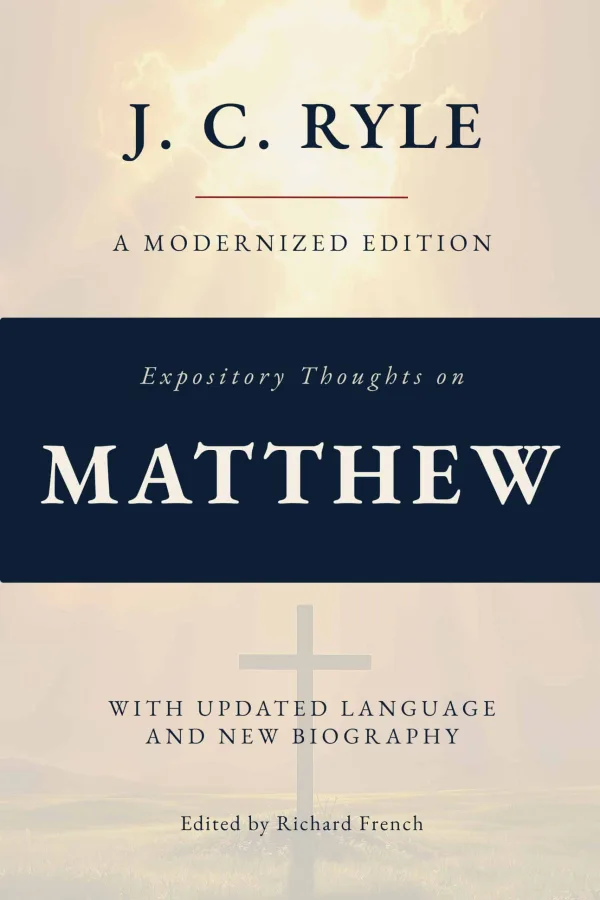
J. C. Ryle, Expository Thoughts on Matthew, on Matthew 5:1-12 (modernized edition).
A straight line runs from doctrine to conduct in this passage. The Beatitudes define holy living, beginning with humility and poverty of spirit rather than achievement or applause.
Why This Passage Matters
Reading these verses in context protects believers from both harshness and despair. Many Christians today face slogans built from a single isolated line, and context restores Jesus' actual words and intent. The sermon drives hearers back to Christ, who fulfills the Law, and to the Father, who knows, hears, and sees what is done in secret (6:4, 6:8, 7:11).
Conclusion
The most misread sermon on the mount verses come clear when read within their paragraphs, their Old Testament roots, and their first-century setting. If you have ever felt crushed by "be perfect" or confused by "don't judge," take heart: Jesus is not setting a trap for you. He invites you to come as the poor in spirit, trust the Father's care for your daily needs, and build your life on the rock by hearing and doing his words (7:24). For a deeper passage-by-passage exploration, see J. C. Ryle's Expository Thoughts on the Gospels (modernized edition) and the accompanying Gospel study workbooks.