By their fruits. That short phrase from Jesus closes one of the most searching sections in the Sermon on the Mount. Near the end of his teaching on the mountain, Jesus stops describing kingdom life and calls his hearers to decide. He offers two gates, two ways, and two destinations, and he gives one test for every voice that claims to speak for God: "By their fruits you will know them" (WEB Matthew 7:16).
Maybe you have listened to a confident speaker and wondered whether to trust what you heard. Jesus' first hearers lived among competing religious voices, including Pharisees, scribes, revolutionaries, and wandering miracle-workers, so they knew that question well. Matthew 7:13-20 is Jesus' invitation to choose the narrow way and his gift of a patient test for discerning teachers. This article is part of our Sermon on the Mount Explained: A Verse-by-Verse Guide, and it walks through the narrow gate, the warning about false prophets, the tree and fruit test, and how this passage leads into the Sermon's final call.
Quick Answer: "By their fruits" is Jesus' test for telling true teachers from false ones in Matthew 7:15-20. A tree's fruit reveals its nature, so the settled pattern of a teacher's life and teaching shows what is inside. The test follows the call to enter the narrow gate (7:13-14), and together they call believers to wholehearted commitment and patient discernment.
Definition: The phrase "by their fruits" in the Gospels refers to Jesus' standard for recognizing true and false spiritual teachers through the observable pattern of their conduct and teaching over time.
Key Scripture: "Therefore by their fruits you will know them." (WEB Matthew 7:20)
Key Evidence: As J. C. Ryle writes, "Sound doctrine and holy living are the marks of true prophets." (Expository Thoughts on Matthew, on Matthew 7:12-20).
Context: Matthew 7:13-20 opens the Sermon's closing sequence of paired contrasts that press each hearer toward a decision.
This passage exists to turn teaching into decision. Jesus has spent two and a half chapters describing kingdom righteousness, and here he presses his hearers to act on it. The narrow gate calls for commitment, and the fruit test calls for discernment about the teachers who claim to lead the way. Together they remind us that following Jesus is both a personal choice and a community habit of careful, humble listening. The sections below examine each image in turn, trace their roots in the Old Testament, and show how the passage points forward to the Sermon's final parable.
Key Takeaways
- Narrow gate: Jesus commands a deliberate entry because the crowded, default road ends in destruction (WEB Matthew 7:13).
- Costly way: The word for "restricted" shares a root with the word for tribulation. The path costs something and ends in life.
- Disguised danger: False prophets look like sheep, so Jesus supplies a test that works over time.
- By their fruits: Fruit includes both what a teacher says and how that teacher lives.
- Fruit as evidence: Good fruit grows from new life in Christ and shows that the life is real.
What Does the Bible Say About the Narrow Gate and By Their Fruits?
By their fruits sits inside a three-step movement in Matthew 7:13-20: a command to enter (7:13-14), a warning (7:15), and a test (7:16-20). Jesus opens with an imperative, not an observation: "Enter in by the narrow gate; for the gate is wide and the way is broad that leads to destruction, and there are many who enter in by it." (WEB Matthew 7:13). The wide gate is the easy, crowded default, the path most people take without a second thought.
Jesus then warns, "Beware of false prophets, who come to you in sheep's clothing, but inwardly are ravening wolves" (WEB Matthew 7:15). Because the danger comes disguised, Jesus supplies a test rather than relying on appearances. He states it in verse 16 and repeats it in verse 20, framing the whole paragraph.
Matthew 7:13-20 calls every hearer to choose the narrow way of Christ and to weigh every spiritual guide by the fruit of life and teaching.
The Narrow Gate and the Restricted Way
Jesus describes the way to life honestly, in vivid terms: "How narrow is the gate and the way is restricted that leads to life! There are few who find it." (WEB Matthew 7:14).
- Few find it: this describes how people actually respond, not a limit on God's welcome.
- The gate is Christ: Jesus elsewhere says, "I am the way, the truth, and the life. No one comes to the Father, except through me" (WEB John 14:6).
How Jesus Exposes False Prophets in Sheep's Clothing
The danger Jesus describes comes from inside the flock, not outside it. Paul gave the Ephesian elders the same warning, that wolves would rise from among their own number (Acts 20:29-30). Jesus connects this warning to the scene that follows: "Not everyone who says to me, 'Lord, Lord,' will enter into the Kingdom of Heaven" (WEB Matthew 7:21). Impressive gifts and large followings do not suspend the fruit test.
In context, Jesus is equipping ordinary people, not only church leaders, to use discernment. Perhaps you have felt unsure whether you are qualified to judge a teacher at all. The Bereans of Acts 17:11 were commended for examining the Scriptures daily to check even Paul's teaching, and Jesus gives the same kind of test to anyone willing to look patiently.
Jesus equips ordinary believers to examine their teachers by giving them a test (WEB Matthew 7:16-20) that reveals over time what is hidden at first sight.
By Their Fruits: Reading the Tree Over Time
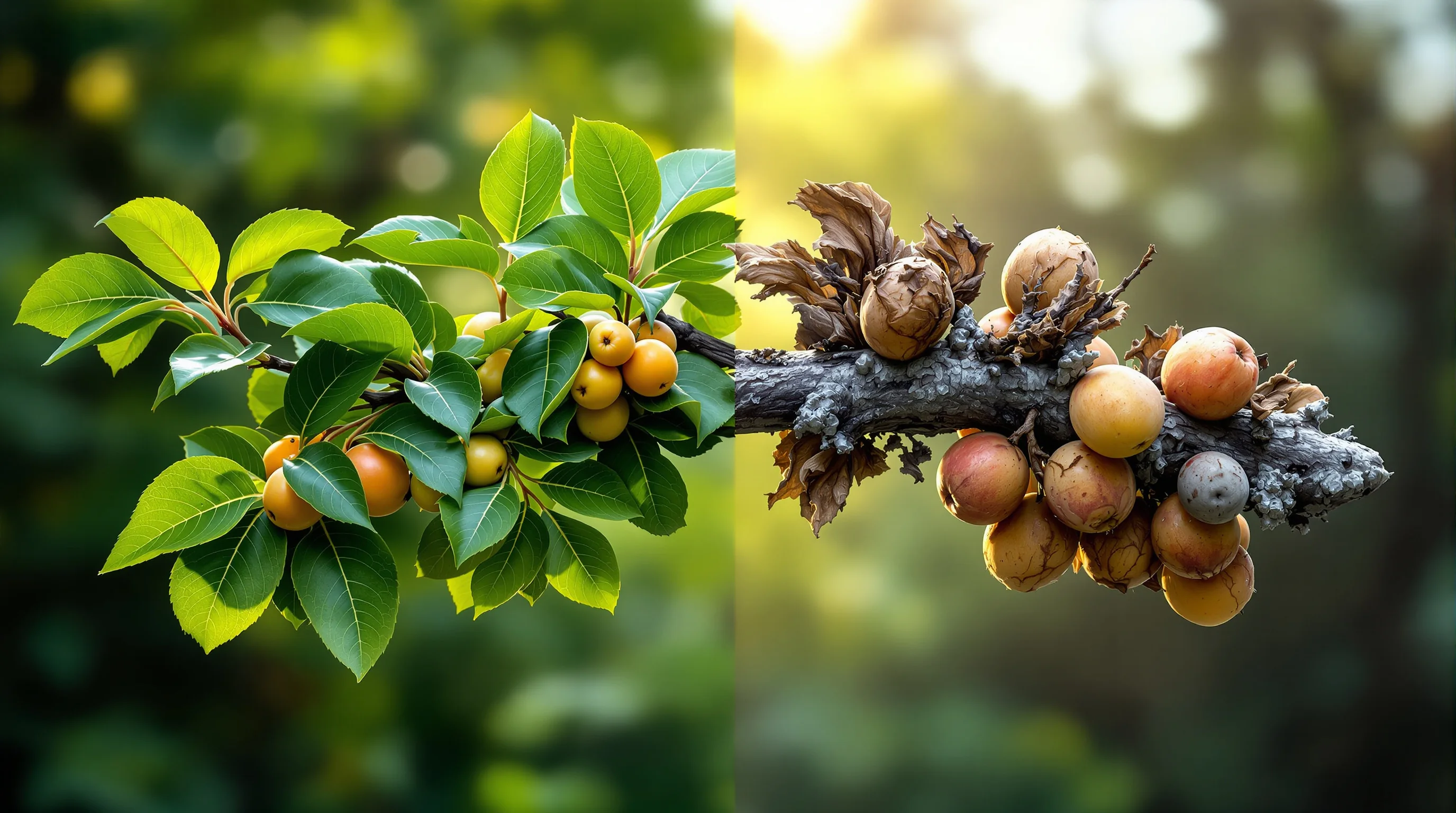
Jesus reaches for farming images every Galilean hearer knew well: grapes, thornbushes, figs, and thistles.
- Fruit follows nature: "A good tree can't produce evil fruit, neither can a corrupt tree produce good fruit" (WEB Matthew 7:18). Sapros means rotten or worthless.
- Patient recognition: the verb epiginōskō means to recognize fully, describing careful observation of a pattern rather than a snap judgment.
Understanding Matthew 7:13-20 in Its Old Testament Context
In context, Jesus draws on a two-ways pattern that runs through Israel's Scriptures. Moses set life and death, blessing and curse, before Israel and urged them to choose life (WEB Deuteronomy 30:19). Psalm 1 ends with the same contrast: "For the LORD knows the way of the righteous, but the way of the wicked shall perish" (WEB Psalm 1:6). Jeremiah 21:8 speaks of the same choice between the way of life and the way of death.
The prophet test has Old Testament roots too. Deuteronomy 13 and 18 give Israel criteria for judging prophets, and Ezekiel 22:27 pictures corrupt leaders as wolves tearing their prey. The tree imagery echoes Psalm 1 and Jeremiah 17:7-8, where the righteous are pictured as fruitful trees, and the fire awaiting fruitless trees in verse 19 recalls John the Baptist's warning in Matthew 3:10.
Jesus draws on Israel's ancient two-ways teaching and applies it to the decision every hearer faces about him.
Two Gates, Two Trees, Two Builders
Taken together, Matthew 7:13-27 moves through a series of paired contrasts that press the reader toward a choice.
- The sequence: two gates (7:13-14), two trees (7:15-20), two professions (7:21-23), and two builders (7:24-27).
- Placement: Matthew sets this material at the Sermon's climax, right after the Golden Rule sums up "the law and the prophets" (7:12). You can read our earlier look at that section in the post on Matthew 7:1-12.
Why By Their Fruits Matters for Christians Today
By their fruits gives believers a steady way to weigh the voices they follow, measured against Scripture rather than charisma or confidence. Good works grow from life in Christ; grace saves, and fruit shows that the life is real. It's okay to find this kind of discernment hard. Jesus has just warned against hypocritical judging (7:1-5), so this test calls for patience and humility, beginning with an honest look at our own hearts.
The Spirit gives believers a pattern to grow into, and Paul lists its shape: "love, joy, peace, patience, kindness, goodness, faith, gentleness, and self-control" (WEB Galatians 5:22-23). The word "few" in verse 14 is meant to humble us, and it gives no reason to grow anxious about others. The one who calls us to the narrow way walks it with us and brings us safely to life.
The fruit test is a kindness from Jesus that protects his people from deception and invites them into a life that bears visible good.
What J. C. Ryle Says About Fruit and Faithful Teaching
Ryle's comments on these verses tie the narrow way and the false prophet together: the hearer who would keep clear of the broad way must beware of those who teach it.
This is a warning which is much needed. There are thousands who seem ready to believe anything in religion, if they hear it from an ordained minister. They forget that clergymen may err as much as laymen. They are not infallible. Their teaching must be weighed in the balance of Holy Scripture. They are to be followed and believed, so long as their doctrine agrees with the Bible, but not a minute longer. ... Sound doctrine and holy living are the marks of true prophets.
J. C. Ryle, Expository Thoughts on Matthew, on Matthew 7:12-20 (modernized edition).
Ryle draws out a point worth holding onto: no teacher is beyond testing, and the fruit Jesus points to in Matthew 7:16-20 is both what a teacher believes and how he lives. Ryle also names the best safeguard against false teaching: "the regular study of the word of God, with prayer for the teaching of the Holy Spirit." For readers who want to trace this theme across the Gospel, J. C. Ryle's Expository Thoughts on the Gospels follows it passage by passage through Matthew.
Why This Passage Matters
Matthew 7:13-20 asks each reader which road they are on and whose voice they trust. Believers today face many confident voices, and Jesus gives them a clear and patient test. The narrow gate is Christ himself, and the fruit he produces in his people is the visible mark of his grace.
Conclusion
If you have ever worried that you might follow the wrong voice, or that your own faith is too small to count, take heart. Jesus calls you to enter the narrow gate and to recognize true and false teachers by their fruits, observed patiently over time. The narrow way costs something, but it ends in life, with Christ beside you the whole way. This passage sets up the Sermon's final scene, where the wise and foolish builders show that hearing and doing the words of Jesus decides everything (WEB Matthew 7:24-27), and the crowds are left astonished at his authority (WEB Matthew 7:28-29). You can read that conclusion in our post on Matthew 7:21-29, or return to the full Sermon on the Mount Explained: A Verse-by-Verse Guide. For a deeper verse-by-verse exploration, see J. C. Ryle's Expository Thoughts on the Gospels (modernized edition) and the Gospel study workbooks.