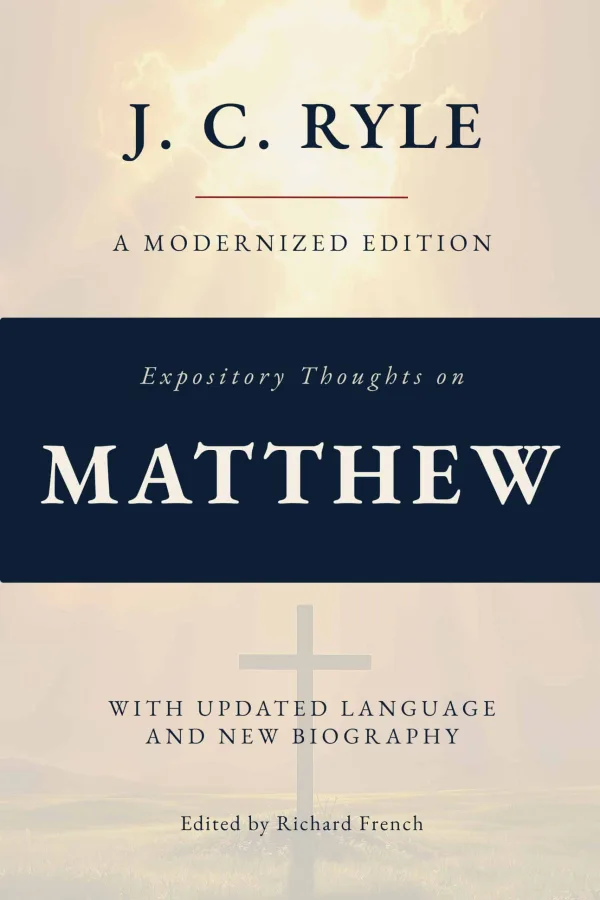
Few passages in the Gospels receive higher praise than Matthew 11:25-30, and J. C. Ryle ranks it among the most important (Expository Thoughts on Matthew, on Matthew 11:25-30). The verses matter because of what surrounds them. John the Baptist sends from prison to ask whether Jesus is "he that should come" (KJV Matthew 11:3), crowds criticize both John and Jesus, and whole towns refuse to repent despite seeing his miracles (Matthew 11:2-24). Against that backdrop of rejection, Jesus speaks some of his warmest words.
The Matthew 11:28-30 meaning begins with the kind of invitation this is. It is not a vague offer of comfort for anyone feeling tired. It specifically grounds rest in the Person of Christ, the Son who alone reveals the Father (Matthew 11:27), and it calls hearers into discipleship under him.
Maybe you've read this passage many times and found it comforting without knowing quite why. That is a fine place to start. We will walk through the verses in order, beginning with the foundation Jesus lays just before his famous words, then consider how Christians have read "burden" and "yoke," and close with Ryle's own reflections.
Quick Answer: The meaning of Matthew 11:28-30 is that Jesus, the Son who alone knows and reveals the Father, personally invites all who "labour and are heavy laden" to come to him for rest. Those who come take his yoke and learn of him, the meek and lowly Teacher whose yoke is easy and whose burden is light.
Definition: Matthew 11:28-30 in the Gospels represents Jesus' personal invitation to the weary to find rest through discipleship under his gentle authority rather than under the crushing demands of self-effort or religious tradition.
Key Scripture: "Come unto me, all ye that labour and are heavy laden, and I will give you rest." (KJV Matthew 11:28)
Key Evidence: As J. C. Ryle writes, "There is rest in Christ, rest of conscience, and rest of heart, rest built on pardon of all sin, rest flowing from peace with God." (Expository Thoughts on Matthew, on Matthew 11:25-30)
Context: The invitation rests on the claim of verse 27 that "all things are delivered unto me of my Father," so the offer of rest is an offer of Christ himself.
This passage functions as both a claim and a call. It claims that Jesus alone holds the Father's full revelation, and it calls the weary to receive rest through him rather than through their own striving. If these verses have ever felt too familiar or too lofty to grasp, you are in good company, since faithful readers have returned to them for centuries.
Key Takeaways
- Childlike reception: The Father hides these things "from the wise and prudent" and reveals them "unto babes" (KJV Matthew 11:25). Ryle names pride as the great obstacle to seeing Christ.
- The Son's authority: Verse 27 grounds the invitation in the Son's distinctive knowledge of the Father.
- A wide invitation: "All ye that labour" reaches, in Ryle's reading, the weight of sin, sorrow, anxiety, and remorse alike.
- Yoke and learning: Coming to Jesus means becoming his disciple.
- A kindly service: His yoke is easy because the Teacher is "meek and lowly in heart."
The Setting of Matthew 11:28-30 Meaning: Verses 25-27
The Matthew 11:28-30 meaning depends on the three verses that come just before it. "At that time" ties the prayer that follows to the woes Jesus has just pronounced on Chorazin, Bethsaida, and Capernaum (Matthew 11:20-24). Jesus thanks the Father that he has "hid these things from the wise and prudent, and hast revealed them unto babes" (KJV Matthew 11:25). The "babes" are not children in age but the humble and teachable, those willing to receive rather than to judge.
In verse 26, Jesus rests in the Father's sovereign good pleasure: "Even so, Father: for so it seemed good in thy sight" (KJV Matthew 11:26). Ryle calls the sovereignty of God here "a deep mystery" and draws a practical lesson from it: "Nothing is so likely to keep a man out of heaven, and prevent him seeing Christ, as pride" (Ryle, on Matthew 11:25-30).
Verse 27 then grounds everything that follows. "All things are delivered unto me of my Father: and no man knoweth the Son, but the Father; neither knoweth any man the Father, save the Son, and he to whomsoever the Son will reveal him" (KJV Matthew 11:27). The Greek term behind "knoweth" (epiginōskō) is often taken to stress full or intimate knowledge, though some scholars see little difference from the simple verb. Ryle draws out the implication: "If we have Christ, we have all things" (Ryle, on Matthew 11:25-30). Only the Son who fully knows the Father can give rest that reaches all the way to God.

Matthew 11:28-30 Meaning Verse by Verse
The passage that follows takes the shape of a threefold call, come, take, and learn, each joined to a promise. This pattern echoes Old Testament wisdom invitations such as Proverbs 8-9 and Isaiah 55:1-3, where Wisdom or the LORD calls out to the simple and the thirsty. The emphatic "I" in verse 28 matches the claim of verse 27. The Revealer of the Father is himself the giver of rest.
By offering his yoke, Jesus makes a startling claim: the Teacher himself, and not only his teaching, is the center of devotion. The placement in Matthew's Gospel reinforces the point, because two Sabbath disputes follow immediately (Matthew 12:1-14), where Jesus declares, "For the Son of man is Lord even of the sabbath day" (KJV Matthew 12:8). The promise of rest leads straight into a contest over what true rest means.
Verse 28: "Come Unto Me"
The invitation is personal and urgent, spoken to the exhausted just after Chorazin and Capernaum refused him (Matthew 11:20-24).
- Labour: The Greek kopiaō means toil to the point of weariness.
- Heavy laden: This renders a perfect passive participle, picturing people who have been loaded down and still carry the weight.
- Rest: "I will give you rest" (KJV Matthew 11:28). Ryle observes that Jesus attaches no hard conditions to the offer.
Verse 29: "Take My Yoke Upon You"
Taking the yoke and learning are two commands joined together in Matthew 11:29, and both describe discipleship.
- Learn of me: The Greek manthanō is related to mathētēs, meaning disciple.
- Meek and lowly: "meek and lowly in heart" (KJV Matthew 11:29) matches the "meek" King later pictured in Matthew 21:5.
- Rest for souls: "Ye shall find rest unto your souls" echoes Jeremiah 6:16, where Israel had once answered, "We will not walk therein."
Verse 30: "My Yoke Is Easy"
The closing verse gives the reason the invitation can be trusted.
- Burden language: Jesus speaks of a "burden" he gives, set beside the loads he lifts, so his service differs in kind from the weights that crush.
- Ryle's image: Ryle says Christ's yoke is no more a burden than feathers are to a bird. Compare "his commandments are not grievous" (KJV 1 John 5:3).
How Christians Read the Burden and the Yoke
Christians across traditions agree on the core claims here: Jesus is the giver of rest, the yoke means discipleship, and the invitation stands on the authority claimed in verse 27. Readers differ on the kind of burden Jesus has in view. It's okay if you find yourself drawn to more than one view, since each has been held by careful interpreters.
Some readers take the burden to be chiefly the weight of religious tradition, the "heavy burdens and grievous to be borne" that the scribes and Pharisees laid on others (KJV Matthew 23:4). Other readers, Ryle among them, hear primarily the gospel invitation to sinners, with rest founded on the pardon of sin. Ryle also widens the address to anyone who feels a load on the heart, so both emphases can sit together in one reading.
A third conversation concerns Wisdom background. Interpreters differ on how far this background shapes verses 28-30. A further question is how the "easy yoke" of verse 30 fits with the costly call of Matthew 16:24, "let him deny himself, and take up his cross, and follow me" (KJV). Ryle grants that following Christ brings a cross to carry, yet holds that the comforts of the Gospel far outweigh it. Readers who want a companion text will find that The Beatitudes Explained raises similar questions about humility and reward earlier in Matthew.
What J. C. Ryle Says About Matthew 11:25-30
Ryle devotes much of his commentary on this passage to Christ's own character, since that character is what makes the invitation trustworthy.
Mark what an encouraging account Jesus gives of Himself. He says, " I am meek and lowly of heart." How true that is, the experience of all the saints of God has often proved. Mary and Martha at Bethany, Peter after his fall, the disciples after the resurrection, Thomas after his cold unbelief, all tasted the " meekness and gentleness of Christ." It is the only place in Scripture where the " heart " of Christ is actually named. It is a saying never to be forgotten.
J. C. Ryle, Expository Thoughts on Matthew, on Matthew 11:25-30 (modernized edition).
Ryle grounds the whole invitation in Christ's character rather than in the hearer's worthiness. Ryle presses the point personally, closing with his own summons: "If we have never come to Him yet, let us begin to come to-day" (Ryle, on Matthew 11:25-30). For a fuller passage-by-passage study, see J. C. Ryle's Expository Thoughts on the Gospel of Matthew (Annotated) and The Gospel of Matthew: A 28-Week Study Workbook, week 11.
Why This Passage Matters
The weary are called to come before fixing themselves, and the call rests entirely on the gentleness of the One who gives it. Rest is promised "unto your souls," not the removal of every trial, so cross-bearing remains even as the soul finds peace with God within it. Coming, taking, and learning form one response, which holds grace and discipleship together. Teachers and parents today also find here a model of gentle leadership rather than a heavier set of demands.
Conclusion
The Matthew 11:28-30 meaning centers on a Person rather than a principle. The Son who alone reveals the Father invites the labouring and heavy laden, gives rest to their souls, and makes them his learners under an easy yoke. Ryle urges readers to come just as they are, today, and to keep coming for fresh grace each day. Whatever you carry, whether sin, sorrow, or simple weariness, you can bring it to him exactly as it is. The invitation is open to you, and the One who gave it is meek and lowly in heart.