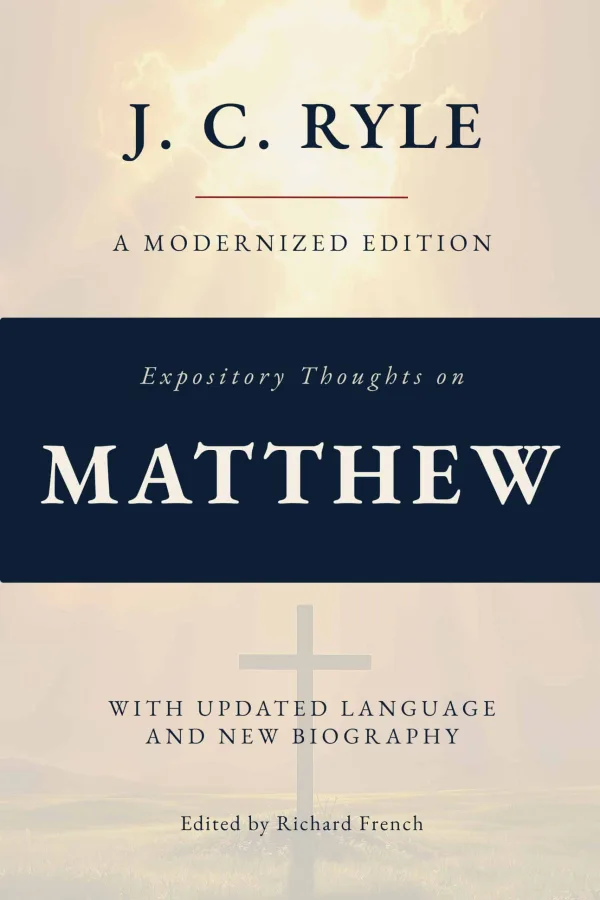
Matthew's Gospel does not end with an ascension scene. It ends on a mountain in Galilee, with a command and a promise. Understanding the Matthew 28:19-20 meaning starts in that closing scene, where J. C. Ryle says Jesus speaks "words so remarkable that they demand and deserve all our attention" (J. C. Ryle, Expository Thoughts on Matthew, on Matthew 28:11-20).
The eleven who received this charge were Galilean Jews with no political standing. Weeks earlier they had scattered when Jesus was arrested, and some still doubted even as they stood on the mountain before Him. The Matthew 28:19-20 meaning is not a triumphant slogan handed to confident heroes. It specifically describes a risen King commissioning weak, worshipping, still-doubting followers and promising them His presence.
Maybe you have wondered whether you know enough, or believe strongly enough, to take any part in this. It is okay to ask that honestly. Let's look at the passage verse by verse, from verse 16 through verse 20, noting where faithful Christians read certain details differently.
Quick Answer: The meaning of Matthew 28:19-20 is that the risen Jesus, holding all authority, sends His followers to make disciples of every nation. They do this by baptizing converts in the one name of the Father, Son, and Holy Ghost and teaching obedience to His commands. He promises His presence until the end of the world.
Definition: The Great Commission in the Gospels refers to Jesus' final instruction to His disciples to make disciples of all nations, baptizing and teaching them, backed by His own authority and abiding presence.
Key Scripture: "Go ye therefore, and teach all nations, baptizing them in the name of the Father, and of the Son, and of the Holy Ghost" (KJV Matthew 28:19).
Key Evidence: As J. C. Ryle writes, "Obedience is the only proof of reality." (Expository Thoughts on Matthew, on Matthew 28:11-20)
Context: The word "therefore" ties the command in verse 19 to Christ's claim of "all power" in verse 18.
This passage closes Matthew's Gospel by gathering its major threads into one scene. The commission functions as the hinge between the story of Jesus and the ongoing life of the church He leaves behind. Its authority rests on Christ, its task is to make disciples everywhere, and its comfort is His promised company. The sections below walk through verses 16 to 20 in order, explain the main points where Christians read the text differently, and close with what Ryle draws from these words.
Key Takeaways
- Authority: The commission rests on Christ's universal authority. Ryle calls Him the appointed "heir of all things" (Ryle, on Matthew 28:11-20).
- Make disciples: "Teach" in the KJV translates a Greek imperative meaning "make disciples." It is the passage's one main command.
- All nations: The mission widens from "the lost sheep of the house of Israel" (KJV Matthew 10:6) to the whole world.
- One name: Baptism is "in the name," singular, of three Persons.
- Presence: "I am with you alway" echoes "God with us" (KJV Matthew 1:23).
Matthew 28:19-20 Meaning Begins on the Mountain: Verses 16-18
The Matthew 28:19-20 meaning depends on the scene and the claim that come just before it. "Then the eleven disciples went away into Galilee, into a mountain where Jesus had appointed them." (KJV Matthew 28:16). The number eleven quietly recalls Judas's absence, and the mountain setting echoes earlier mountain scenes in Matthew, including the Sermon on the Mount and the Transfiguration.
"they worshipped him: but some doubted" (KJV Matthew 28:17). Jesus commissions worshipping yet imperfect followers, which offers real comfort to any reader who feels unqualified for the work ahead. Then comes the claim that grounds everything: "All power is given unto me in heaven and in earth" (KJV Matthew 28:18). The Greek word behind "power" is exousia, meaning authority, or the right to act, rather than raw force.
This language recalls Daniel's vision of the son of man, who receives "dominion, and glory, and a kingdom, that all people, nations, and languages, should serve him" (KJV Daniel 7:14). Many interpreters hear in verse 18 an echo of this vision and of Jesus' favorite self-title, though the title itself does not appear here. On that reading, Matthew 28:18 grounds the Great Commission in the enthroned authority of the risen Son of Man.

"Teach All Nations": The Central Command of Verse 19
"Go ye therefore, and teach all nations" (KJV Matthew 28:19) carries the passage's main verb. "Teach" here renders the Greek mathēteusate, meaning "make disciples," while "go" is technically a participle, closer to "going." Many grammarians note that a participle placed before a command in this way shares its force, so "Go" still carries the weight of a command, while baptizing and teaching describe how disciples are made.
In the first-century world, disciples attached themselves to a teacher to learn his way of life. Here the eleven are sent to make disciples of Jesus Himself, not of themselves. The scope has also changed. Jesus once told the Twelve, "Go not into the way of the Gentiles" (KJV Matthew 10:5), but now the field is the whole world.
Ryle writes, "They were not to suppose that salvation was revealed only to the Jews, but to make it known to all the world" (Ryle, on Matthew 28:11-20). The central command of Matthew 28:19 is to make disciples, and every people group is its field.
Who Are "All Nations"?
The phrase panta ta ethnē is read in two main ways. Most interpreters take it to mean all peoples, Israel included, so the mission now reaches Jew and Gentile alike. A minority, notably Douglas Hare and Daniel Harrington ("Make Disciples of All the Gentiles," 1975), read it as the Gentile nations as distinct from Israel.
Baptizing in One Name: The Triune Formula of Verse 19
"baptizing them in the name of the Father, and of the Son, and of the Holy Ghost" (KJV Matthew 28:19) names the first means by which disciples are made. The word "name" is singular, yet it is followed by three Persons. Monotheistic Jews confessed that the Lord is one (KJV Deuteronomy 6:4), so this wording would have sounded significant to Jesus' first hearers.
Baptism marks entry into allegiance to the one God who has revealed Himself as Father, Son, and Spirit. Ryle calls this "one of those great plain texts which directly teach the mighty doctrine of the Trinity" (Ryle, on Matthew 28:11-20), and he also draws from the baptism command "the necessity of a public confession of faith in Christ" (Ryle, on Matthew 28:11-20). Matthew 28:19 joins three Persons under one name, giving one of Scripture's most compact witnesses to the Trinity.
How Christians Read the Baptism Command
Readers agree that baptism is commanded here.
- Necessity, mode, recipients: Ryle holds that baptism is necessary "when it may be had," yet not absolutely necessary to salvation, citing the penitent thief. In a note he declines to use this text either way on infant baptism. Churches also differ on whether baptism is ordinarily necessary for salvation (as Roman Catholic, Orthodox and Lutheran teaching holds) or a sign and seal of grace that is not itself necessary for salvation (as Baptist and Reformed churches, in different ways, hold), and on immersion and infant baptism, questions this passage alone does not settle.
Matthew 28:19-20 Meaning for Obedience and Presence: Verse 20
In verse 20, the Matthew 28:19-20 meaning turns from the task of making disciples to a disciple's daily life and daily comfort. "Teaching them to observe all things whatsoever I have commanded you" (KJV Matthew 28:20) names the second means by which disciples are made. The Greek tērein means to keep or obey, and its content is Jesus' own teaching, gathered across Matthew's five great discourses.
Ryle presses the point with a question: "Is the Sermon on the Mount our rule and standard?" (Ryle, on Matthew 28:11-20). Then comes the closing promise: "lo, I am with you alway, even unto the end of the world" (KJV Matthew 28:20). The phrase is literally "all the days," covering every ordinary day until the consummation of the age.
Matthew opens by calling Jesus "God with us" (KJV Matthew 1:23) and closes with this same promise of presence, framing the whole Gospel. Ryle writes simply, "Christ is 'with us' always. Christ is 'with us,' wherever we go" (Ryle, on Matthew 28:11-20). Matthew 28:20 promises the company of Christ on every day of the church's mission until the end of the age.
How Far Does "All Things" Reach?
Interpreters agree the content taught is Christ's own commands. Some limit "all things whatsoever I have commanded you" chiefly to the teaching recorded in Matthew, especially its five discourses; others take it to cover the whole of Christ's teaching as handed on by His apostles.
What J. C. Ryle Says About Matthew 28:16-20
Ryle treats the commission as binding on every believer, not only on the eleven who first heard it.
Let us never forget that this solemn injunction is still in full force. It is still the bounden duty of every disciple of Christ to do all he can in person, and by prayer, to make others acquainted with Jesus. Where is our faith, if we neglect this duty? Where is our love? It may well be questioned whether a man knows the value of the Gospel himself, if he does not desire to make it known to all the world.
J. C. Ryle, Expository Thoughts on Matthew, on Matthew 28:11-20 (modernized edition).
For Ryle, obedience grows out of love. A desire to share the gospel becomes evidence that a believer actually values what they have received. Concern for others, in other words, is the natural fruit of a heart that treasures Christ.
Why This Passage Matters
The mission rests on Christ's strength, so the weakness of His servants never limits it. Every believer shares in the work: parents, teachers, and friends make disciples in ordinary settings, while others go abroad. The good news reaches all nations because the crucified and risen King reigns and walks with His people every day.
Conclusion
Matthew 28:19-20 gives the church its mission, its method, and its comfort. Christ's authority is the ground, making disciples of all nations is the task, baptism and teaching obedience are the means, and His daily presence is the promise. Holding these together is the heart of the Matthew 28:19-20 meaning.
The eleven doubted on that mountain, yet Jesus sent them anyway. If you feel timid, tired, or unsure where to begin, He says "I am with you alway" (KJV Matthew 28:20) to you as well. Start small, with one conversation or one act of faithful teaching, and trust the One who walks beside you. For a fuller passage-by-passage study, see J. C. Ryle's Expository Thoughts on the Gospel of Matthew (Annotated) and The Gospel of Matthew: A 28-Week Study Workbook, week 28.